
YouTube Analytics: Metrics for Long-Form Videos
Want better results from your long-form YouTube videos? Here’s what you need to know: YouTube prioritizes metrics like watch time and audience retention for videos over 10 minutes. These metrics not only improve your video’s visibility but also directly impact revenue opportunities like mid-roll ads. For creators, understanding and tracking these analytics is essential to growing a channel.
Key Takeaways:
- Watch Time & Retention: Aim for 50% Average Percentage Viewed (APV) to keep viewers engaged.
- CTR & AVD: Target a 4%-10% Click-Through Rate (CTR) and ensure viewers stay engaged with an Average View Duration (AVD) above 50%.
- Engagement: Comments, likes, and shares indicate audience interaction and help shape future content.
- Traffic Sources: Search traffic delivers engaged viewers, while Suggested Videos and Browse Features bring in casual audiences.
- Shorts as a Gateway: Use engaging moments from long-form videos to attract new viewers via Shorts.
By analyzing viewer behavior (like drop-off points and top moments), refining thumbnails, and optimizing titles, you can create content that keeps audiences engaged and grows your channel over time. Success comes from consistent analysis and using insights to improve future videos.
YouTube Long-Form Video Analytics: Key Metrics and Target Benchmarks
Core Metrics for Long-Form Videos
Watch Time and Retention Rates
Watch time measures the total minutes your video has been viewed, while retention shows what percentage of viewers stick around at any given moment. Think of watch time as quantity and retention as quality.
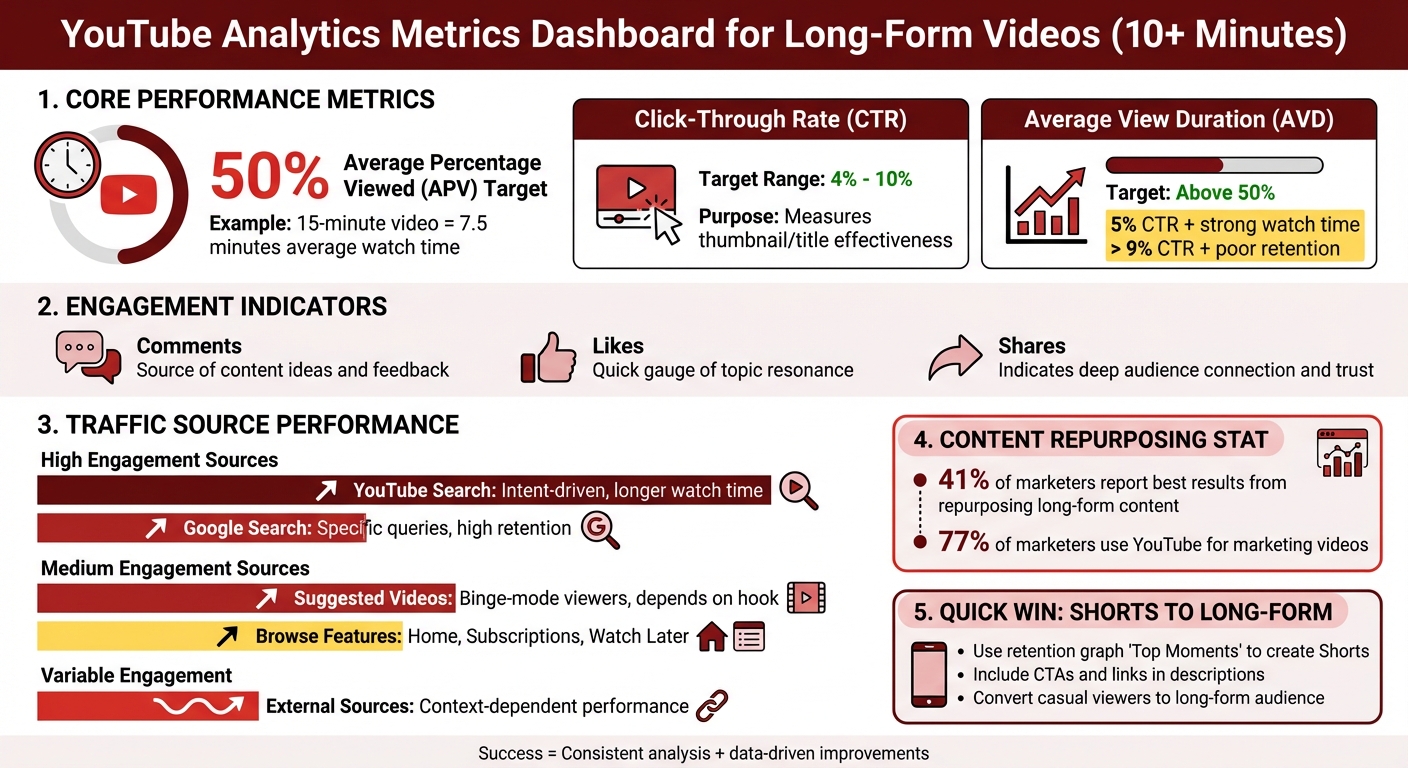
For videos longer than 10 minutes, aim for an Average Percentage Viewed (APV) of at least 50%. For instance, if your video runs 15 minutes, the goal is for viewers to watch at least 7.5 minutes on average. YouTube Studio’s retention graph is a powerful tool here - it highlights where viewers drop off and where they rewatch. Spotting these trends can shape your future content strategy.
"While views are a vanity metric, watch time and audience retention are the true indicators of content quality and viewer engagement." – Improvado
From here, you can dive deeper into Average View Duration (AVD) and Click-Through Rate (CTR) for a fuller picture.
Average View Duration (AVD) and Click-Through Rate (CTR)
CTR tells you how often viewers click your thumbnail after seeing it, while AVD reveals how long they stay engaged with your video. For long-form content, aim for a CTR between 4% and 10% and an AVD above 50%. These two metrics, combined with retention, help you evaluate whether your thumbnails and titles match viewer expectations.
If you see a high CTR but a low AVD, it might mean your thumbnail or title overpromised and underdelivered. On the other hand, a 5% CTR with strong watch time can outperform a 9% CTR with poor retention in the long run. If there’s a disconnect, tweak your thumbnails to better reflect the content or start your video with immediate value to hook viewers.
Engagement Metrics: Likes, Comments, and Shares
Engagement metrics go beyond how long people watch - they show how your audience is interacting with your content. Comments give insight into what resonates with viewers and what they want to see next. Shares indicate trust and alignment with your audience’s identity - people usually share content they strongly connect with. Likes and dislikes serve as a quick gauge of how well your topic landed. Even negative interactions signal to YouTube’s algorithm that your content is engaging.
"YouTube comments are an invaluable source of ideas, feedback, and engagement." – Michael Stelzner, Founder, Social Media Examiner
Pay attention to your comments - they can inspire new topics or reveal common questions from your audience. If your retention graph shows spikes in certain parts of a video, those moments are likely being rewatched or shared. Consider turning those segments into standalone videos or Shorts to draw in fresh viewers. Also, track which videos get shared the most - these are your standout pieces that resonate deeply with your audience and drive public endorsements.
Traffic Sources and Session Duration
How Different Traffic Sources Perform
YouTube and Google Search are excellent at bringing in viewers who are actively looking for something specific. These intent-driven viewers tend to stick around longer because they arrive with clear questions or needs, making them more likely to watch your video from start to finish. Suggested Videos, on the other hand, rely on recent viewing habits to recommend your content. If your opening grabs attention, these viewers - already in "binge mode" - can add a lot to your overall watch time.
Browse Features, like the Home screen, Subscriptions feed, and Watch Later, reflect how your loyal audience engages and how new viewers discover your content. External sources, such as websites or social media, can be hit-or-miss, depending on whether your video aligns with the context in which it's shared. By analyzing watch time by traffic source in YouTube Studio, you can pinpoint which channels bring in the most engaged viewers and tweak your strategy to focus on those.
"Watch time is your single most important metric in YouTube analytics. It's the metric that the algorithm will reward you for: better retention means better placements and more impressions." – Justin Brown, Video Strategist
If your Browse Features generate a lot of impressions but have a low click-through rate, it might be time to rethink your thumbnails to better catch the eye of casual scrollers. For search traffic, fine-tuning your titles and descriptions with the exact keywords your audience is using can make a big difference in engagement. These adjustments can help turn one-time viewers into loyal, long-form audience members.
Converting Shorts Viewers to Long-Form Audiences
Shorts can be a powerful gateway to your long-form content. By repurposing standout moments from your longer videos into Shorts, you can entice viewers to explore the full story. Use your retention graph to identify the most engaging parts of your videos, then turn those into Shorts with clear calls-to-action.
Make it easy for viewers to transition from Shorts to long-form content by including links in the Shorts description or pinning a comment with a direct link. You can also create serialized Shorts or break down complex topics into bite-sized parts, encouraging viewers to dive into your long-form library for the complete picture. Interestingly, 41% of marketers report their best results come from repurposing long-form content across different platforms, proving that this approach isn’t just limited to YouTube.
Using Analytics to Improve Your Content
Finding Your Best-Performing Videos
To figure out which of your videos are resonating the most, focus on three key metrics: CTR (Click-Through Rate), Views, and AVD (Average View Duration). CTR reflects how engaging your title and thumbnail are, Views show how far your content is reaching, and AVD tells you if your video is holding up its end of the bargain by keeping viewers engaged.
The Audience Retention graph is a goldmine for understanding viewer behavior. Pay close attention to "Top Moments" where retention is especially strong - these sections might inspire entire follow-up videos. Watch for "Spikes", which occur when viewers rewatch or share a particular part of your video. These often highlight segments that are especially engaging or clear. On the flip side, "Dips" indicate where viewers skip or click away, signaling areas that may need trimming or improvement.
Another useful tool is comparing your video's retention against the gray shaded area in retention charts. This area represents your channel's average performance for similar content, giving you a clear benchmark. If 50% or more of viewers are still watching after the first 30 seconds, you've hit the mark for an "above typical intro." Use this insight to refine your opening strategies and replicate what works across future videos.
"Look at your data with interest, not with judgment. Never compare your stats to other channels. You're just here to learn more about your content and your audience." – Justin Brown, Video Strategist
By analyzing these metrics, you can make smarter decisions about your content and explore new creative directions.
Testing Video Formats and Lengths
After digging into metrics like retention and CTR, take the next step: experimentation. Start by focusing on Average View Duration, as it’s the clearest signal of whether your video's length aligns with viewer preferences. For example, if you’re unsure whether to create a 5-minute or 10-minute video, try both on similar topics. Give each at least a month to gather data - YouTube’s algorithm often takes up to three months to fully assess new uploads.
Pay close attention to your intro retention. If more than half your viewers drop off within the first 30 seconds, it’s time to rethink your opening. Test different approaches, like jumping straight to the payoff, posing an intriguing question, or cutting lengthy introductions entirely. Before experimenting, use the Research Tab to uncover content gaps and popular search terms, ensuring your tests align with what viewers are actually looking for.
When retention dips occur, dig into those moments. Was the pacing too slow? Did you include unnecessary filler? Use these insights to refine your approach. If "Top Moments" appear late in the video, consider moving that type of content earlier next time to hook viewers before they drop off. Make small, incremental changes and track their impact using metrics like CTR, retention, and AVD. This way, you’ll have clear evidence of what’s working and what needs adjustment.
sbb-itb-94859ad
How to Master Your YouTube Analytics
Conclusion
Grasping the ins and outs of YouTube Analytics is what sets thriving channels apart from those that merely get by. The platform's algorithm favors creators who excel in metrics like watch time and audience retention, rewarding them with better placements and increased impressions. As Konstantin Govorkov, Senior Demand Generation Manager at Improvado, explains: "The difference between channels that grow and those that plateau lies in how precisely teams track and interpret the signals that actually drive discovery and audience retention".
But these metrics aren't just about identifying what works - they help uncover why it works. By diving into retention curves, traffic sources, and engagement patterns, you can pinpoint the storytelling techniques, hooks, and pacing that resonate most with your viewers. This insight is crucial, especially since 77% of marketers already rely on YouTube to showcase their company’s marketing videos. The creators who succeed are the ones making informed, data-driven choices.
While short-form videos may dominate the spotlight, long-form content remains a cornerstone for building a loyal audience and steady revenue. Long-form videos continue to grow in popularity, and their true value often becomes apparent over time. The trick is to stay consistent and apply what your analytics reveal, even when results aren't immediate.
Metrics like RPM (Revenue per Mille) are also key to identifying which topics attract high-value advertisers and deliver the best returns. When paired with insights from retention reports and traffic sources, these numbers can help you craft a strategy that not only grows your audience but also boosts your revenue.
At its core, success on YouTube isn’t about random luck - it’s about understanding the data that drives engagement and revenue. Your analytics dashboard is more than just a collection of numbers; it’s a guide. Use it to refine your content strategy, improve visibility, and build a revenue stream that lasts.
FAQs
What are the best ways to boost watch time and keep viewers engaged with long-form YouTube videos?
To increase watch time and keep viewers hooked, dive into YouTube Analytics’ Audience Retention report. This tool helps you pinpoint exactly where viewers lose interest. Use this data to fine-tune your videos: tighten up your intro, include an attention-grabbing hook right at the start, and structure your content with clear video chapters to make navigation easier. Consistent pacing and delivering value throughout the video are essential to keeping your audience engaged.
Keep an eye on metrics like average view duration and watch time to track patterns and identify areas for improvement. Try experimenting with storytelling approaches, dynamic visuals, or fresh editing styles to see what clicks with your audience. Over time, these tweaks can make a noticeable difference in how well your long-form videos perform.
How can I turn my Shorts viewers into long-form video fans on YouTube?
To turn Shorts viewers into fans of your longer videos, focus on creating a smooth connection between the two formats. Shorts are excellent for grabbing attention, but long-form videos are what lead to deeper engagement and longer watch times - both of which YouTube’s algorithm favors.
Use Shorts as bite-sized previews by crafting quick, 15-second hooks that tease your long-form content. Make sure to include a clear call-to-action, such as “Watch the full video now,” and add clickable cards or end screens that link directly to the longer video. This makes it easy for viewers to continue watching. Keep an eye on metrics like average view duration to see which topics grab the most attention, and then expand on those ideas in your long-form content.
Consistency matters. Develop a cohesive style or “universe” for your channel so viewers feel a sense of connection across all your videos. Tools like LongStories.ai can simplify your workflow by offering reusable assets - like characters, voices, and animations - that keep your branding consistent while saving time. You can also create playlists that mix Shorts with long-form videos. This not only increases session duration but also boosts engagement, helping you grow both your audience and revenue.
How do traffic sources affect the success of my YouTube videos?
Traffic sources tell you where your viewers are finding your videos - whether it’s through YouTube search, suggested videos, or even external websites. These sources are key to understanding your video's performance and can directly influence important metrics like watch time, subscriber growth, and overall reach.
When you know which sources drive the most engagement, you can adjust your approach to make the most of them. For instance, using relevant keywords can help optimize your content for YouTube search, while designing eye-catching thumbnails can improve how your videos perform in suggested recommendations. Both strategies can significantly boost visibility and keep your audience watching longer.
Related posts
LongStories is constantly evolving as it finds its product-market fit. Features, pricing, and offerings are continuously being refined and updated. The information in this blog post reflects our understanding at the time of writing. Please always check LongStories.ai for the latest information about our products, features, and pricing, or contact us directly for the most current details.