
Dynamic Pricing for Memberships Using AI

Dynamic pricing for memberships uses AI to adjust fees in real time, tailoring costs based on demand, customer behavior, and operational expenses. Unlike fixed pricing, this approach ensures businesses can maximize revenue during peak demand while offering discounts to attract price-sensitive users during slower periods. For creators, dynamic pricing aligns membership fees with costs like AI compute usage, helping to maintain profit margins.
Key Takeaways:
- AI-driven pricing can boost revenue by 5–10% per visitor and improve customer satisfaction by 15–20%.
- Real-time adjustments factor in demand trends, usage patterns, and external data.
- Tools like Stripe Billing and SaaSLogic enable usage-based and personalized pricing models.
- Testing and guardrails ensure fair pricing and build trust with subscribers.
- Metrics like churn rate, average revenue per user (ARPU), and customer lifetime value (CLV) help measure success.
This system is particularly useful for digital creators and subscription-based businesses, offering a smarter way to balance revenue growth with customer retention.
Should AI Decide Your Price? The Rise of AI Dynamic Pricing (Ep. 517)
sbb-itb-94859ad
How AI Dynamic Pricing Works for Memberships
AI-driven pricing systems operate through three core layers: data collection, forecasting, and decision-making. The data layer gathers information from transactions, browsing habits, and how customers use features. The forecasting layer uses demand models to predict customer behavior. Finally, the decision-making layer adjusts prices based on business rules you set.
Modern AI systems often rely on reinforcement learning to focus on long-term Customer Lifetime Value (CLV). This means the AI doesn’t just focus on short-term gains but considers how customers interact with your service over months or even years. Roman Kleinerman, VP of Products at Noodoe, noted that their AI pricing system boosted revenue by 10% to 25%, depending on the location.
Real-Time Price Adjustments
AI algorithms can adjust prices in real time using techniques like contextual bandits, which quickly identify the most effective price points. These systems also incorporate external data - such as market trends or seasonal shifts - to detect changes in demand weeks before those trends are reflected in internal sales data.
For example, telecommunications companies using real-time pricing optimization saw revenue gains of 14.3% to 18.7%. Additionally, they experienced a 16.8% increase in Average Revenue Per User (ARPU).
Customer Segmentation for Tailored Pricing
AI goes beyond traditional demographic analysis by examining patterns like purchase history, feature usage, and how customers respond to past discounts. It groups customers based on their "willingness to pay" and perceived value. This allows businesses to maximize revenue from high-value customers while offering more affordable options to price-sensitive users.
A great example of this is Zendesk’s personalized pricing pilot for enterprise clients. By analyzing usage patterns and predicting feature needs, they created custom packages, leading to a 15% increase in enterprise contract values.
These segmentation insights also help AI fine-tune pricing by factoring in broader demand trends.
Demand and Market Trend Analysis
AI analyzes demand patterns and market data to set prices that boost revenue while keeping customers engaged. Unlike static pricing models, AI can identify non-linear demand shifts across different times, channels, and devices. Advanced systems combine multivariate demand forecasting with churn analysis to focus price adjustments on customers willing to pay more, while protecting those at risk of unsubscribing.
"The future of pricing in the subscription economy is dynamic, data-driven, and personalized - and AI is the key to unlocking its full potential." – Erik Knight, PeakCommerce
These systems use seasonal time-series models and tree-based algorithms to handle the complexities of recurring revenue. They can instantly adjust prices when a customer’s behavior changes. However, to maintain trust and fairness, these AI systems should operate within clear guardrails, such as margin limits, customer experience considerations, and ethical bias checks.
Benefits of AI Dynamic Pricing for Content Creators
AI-powered pricing systems uncover revenue opportunities that often slip through the cracks with manual pricing. These systems analyze intricate subscriber behaviors, revealing patterns like price elasticity and subtle subscription trends that human analysis might miss. Instead of merely reacting to market shifts, AI adjusts prices proactively, learning from the complexities of the market in real time. This approach not only drives revenue growth but also strengthens subscriber loyalty.
Maximizing Recurring Revenue
AI takes the guesswork out of pricing by pinpointing the optimal price point for each customer segment. It then dynamically adjusts membership tiers to maximize value. By analyzing willingness-to-pay across various subscriber groups, the system aligns pricing with your business goals, uncovering patterns that would otherwise remain hidden. Businesses using AI-driven dynamic pricing have reported a 5% to 10% boost in revenue per visitor. This success stems from predictive optimization, which forecasts demand changes and adjusts pricing ahead of time, capturing opportunities that static pricing models miss.
AI achieves this by shifting prices for high-value customer segments while offering tailored options for more price-sensitive groups. As Deepit Sapru explains:
"The method consistently outperforms static tiers and uniform uplifts by reallocating price moves toward segments with higher willingness-to-pay while protecting price-sensitive cohorts".
Reducing Subscriber Churn
AI-driven pricing helps retain subscribers by aligning costs with what each individual values. Machine learning models personalize offers in real time, which can reduce cancellations during slow periods. These models analyze unique usage patterns, engagement levels, and past responses to tailor offers for each subscriber.
For instance, AI can identify subscribers who primarily engage during promotional periods and target them with personalized retention offers instead of applying broad price hikes. Pricing guardrails, such as setting price floors and ceilings, ensure that adjustments remain fair and maintain customer trust. These insights enable creators to tackle the challenges of scaling their subscriber base effectively.
Scaling Faceless YouTube Channels
Faceless YouTube channels face distinct challenges, such as catering to a global audience with varying purchasing power and managing fluctuating production costs. AI dynamic pricing offers a solution to both issues. Take "Be Inspired" as an example - a faceless channel with 8.4 million subscribers that generates an estimated $50,000 in monthly revenue through ads and memberships. On average, faceless channels earn between $12,000 and $120,000 annually, provided they maintain a consistent upload schedule.
AI simplifies the process of adjusting membership tiers across diverse markets, fitting seamlessly into the "YouTube automation" workflows that many faceless channels already use. By segmenting global audiences based on location or behavior, AI enables personalized pricing that reflects local demand - something manual management can’t achieve at scale. This automation is vital for channels that rely on high-margin revenue streams like YouTube Memberships and Patreon, which provide stability beyond the typical $18 per 1,000 views from ads.
Additionally, AI helps manage variable production costs. Tools for AI voiceovers and video generation, for instance, cost between $10 and $40 monthly or around $0.20 per minute. Dynamic pricing aligns membership fees with these expenses, ensuring that revenue grows alongside production costs. This approach helps creators avoid the "AI margin trap", where expenses scale faster than income.
How to Set Up AI Dynamic Pricing for Memberships
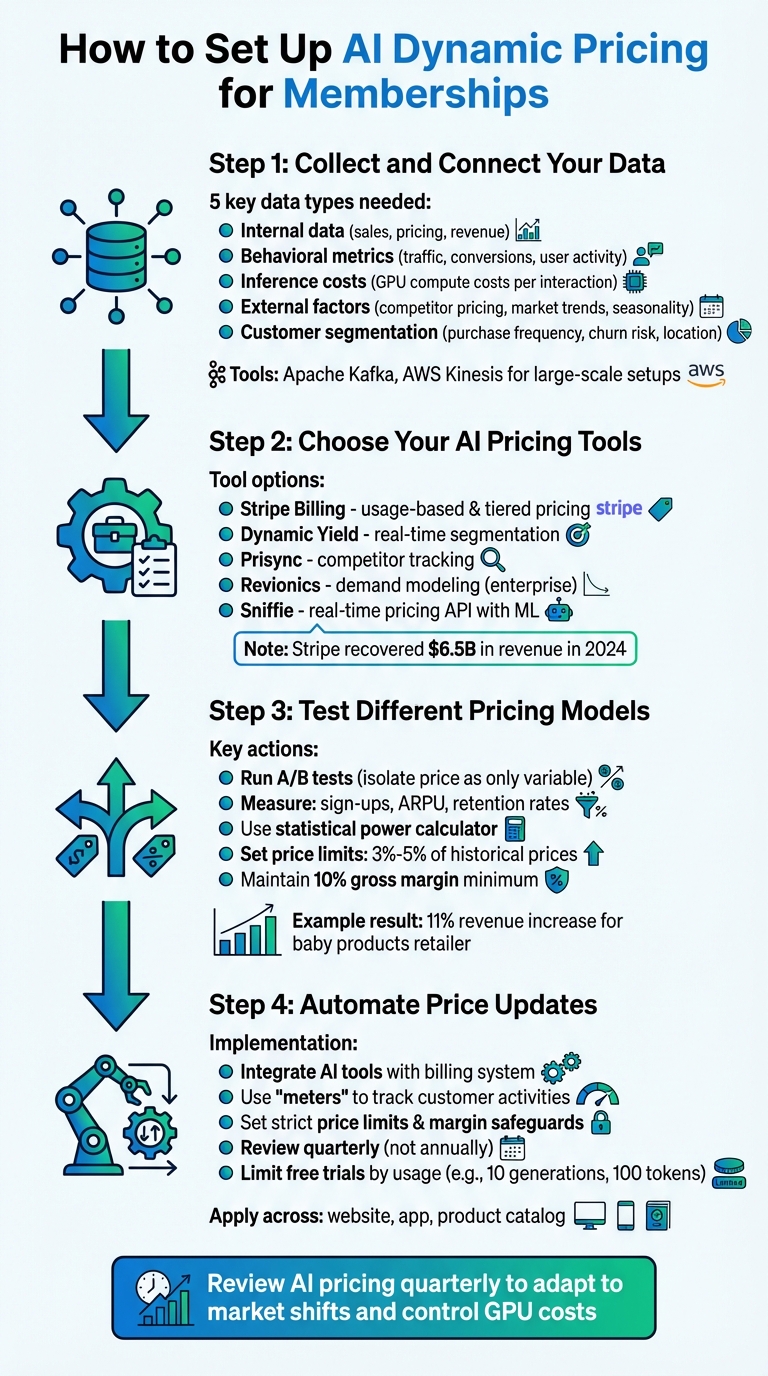
4-Step Guide to Implementing AI Dynamic Pricing for Memberships
Setting up AI-driven dynamic pricing involves connecting the right data sources, selecting scalable AI tools, and ensuring your pricing models are both accurate and adaptable. It's a process that requires a sharp focus on data quality and well-defined pricing boundaries. Here's a step-by-step guide to help you implement AI-powered dynamic pricing effectively.
Step 1: Collect and Connect Your Data
To make your AI pricing system work seamlessly, you'll need five key types of data:
- Internal data: This includes historical sales, order history, pricing trends, and revenue breakdowns.
- Behavioral metrics: Look at site traffic, conversion rates, and user activity like prompts, chats, or renders.
- Inference costs: Track GPU compute costs per interaction, especially for AI-heavy memberships where these costs can significantly affect your margins.
- External factors: Monitor competitor pricing, market trends, seasonality, holidays, and even news events.
- Customer segmentation: Understand purchase frequency, browsing habits, discount sensitivity, churn risk, and geographic location.
For large-scale setups, tools like centralized data lakes or real-time streaming pipelines (e.g., Apache Kafka or AWS Kinesis) can handle both structured and unstructured datasets efficiently.
Step 2: Choose Your AI Pricing Tools
Once your data is integrated, the next step is selecting the right AI tools tailored to your needs. Here are some options:
- Stripe Billing: Supports usage-based and tiered pricing models through APIs.
- Dynamic Yield: Offers real-time customer segmentation.
- Prisync: Tracks competitor pricing effectively.
- Revionics: Models demand for enterprise-level businesses.
- Sniffie: Provides a real-time pricing API with machine learning recommendations, ideal for fast-growing direct-to-consumer brands using headless architecture.
These tools typically integrate through APIs to ensure secure communication between your pricing engine and front-end systems. Webhooks can trigger actions like updating billing statuses. For example, Stripe's recovery tools reportedly helped users recover over $6.5 billion in revenue in 2024 through automated workflows.
Step 3: Test Different Pricing Models
Before rolling out new pricing, run A/B tests to isolate price as the only variable. This approach helps you measure its impact on sign-ups, average revenue per user (ARPU), and retention rates. Be cautious to avoid overlapping campaigns or product updates that could skew your results. Using a statistical power calculator can help you determine the number of participants and the duration needed - often several weeks - for accurate results.
For instance, in 2023, a major Chinese online retailer adopted AI-powered pricing for its top 30 baby-feeding bottle SKUs, which accounted for 80% of the subcategory's revenue. By analyzing competitor stock levels and brand reputation, they boosted revenue by 11% while maintaining a 10% gross margin. To avoid alienating customers, they limited price changes to 3%-5% of historical prices. Setting minimum and maximum price limits, along with rate-of-change controls, can help maintain customer trust and minimize revenue risks.
Step 4: Automate Price Updates
After testing, integrate your AI tools with your billing system to automate price updates across your website, app, and product catalog. Use "meters" to track customer activities - like API requests or content views - over a billing period, which is essential for usage-based pricing models. Always simulate billing events in a test environment before launching live updates.
Set strict price limits and margin safeguards to prevent unexpected losses and maintain customer confidence. Unlike traditional pricing reviews, revisit AI-driven pricing quarterly. This is crucial because factors like compute costs and market dynamics can shift rapidly. For memberships with high AI usage, consider limiting free trials based on usage (e.g., 10 generations or 100 tokens) rather than time periods to control GPU costs from non-paying users.
AI Tools for Dynamic Membership Pricing
Using specialized AI tools is the next logical step to turn data insights into actionable membership pricing strategies. Once you've integrated your data and validated the pricing models, it's time to implement them effectively. The tools below each bring something different to the table - some focus on payment systems, others on pricing experiments, and one even helps creators scale their content production. Together, these platforms can help you manage dynamic membership pricing with ease.
LongStories.ai

LongStories.ai addresses one of the biggest challenges for membership-based channels: content production. By creating high-quality, scalable content, it ensures that members feel the value of recurring payments. With this platform, you can generate up to 10-minute videos at scale by building reusable "Universes" that feature consistent characters, styles, and voices. This process removes traditional hurdles like animation, voiceover, and editing.
LongStories.ai also integrates with your billing system through API access, allowing you to track production metrics like the number of videos created or the quality of animations used. For instance, if you're managing a faceless YouTube channel with tiered memberships, you could charge $9/month for basic access and include usage-based fees for Pro Animation renders. Plans start at $9/month, and new users can access a 400-credit free trial.
While LongStories.ai takes care of content creation, you'll need a strong billing system to handle the financial side.
Stripe Dynamic Pricing Engine
Stripe Billing is designed for businesses that require flexible, usage-based pricing models tied to real-time customer activity. It tracks events like API requests or content views during billing cycles to calculate charges.
Stripe supports a variety of pricing structures, including tiered logic, graduated pricing, and flat-fee plus overage models. These features make it easier to capture revenue from both casual users and power users. Additionally, its Smart Retries feature has been instrumental in reducing involuntary churn, helping users recover over $6.5 billion in revenue in 2024. With support for over 135 currencies and 125+ local payment methods, Stripe is an excellent option for creators with global audiences.
SaaSLogic Billing Platform
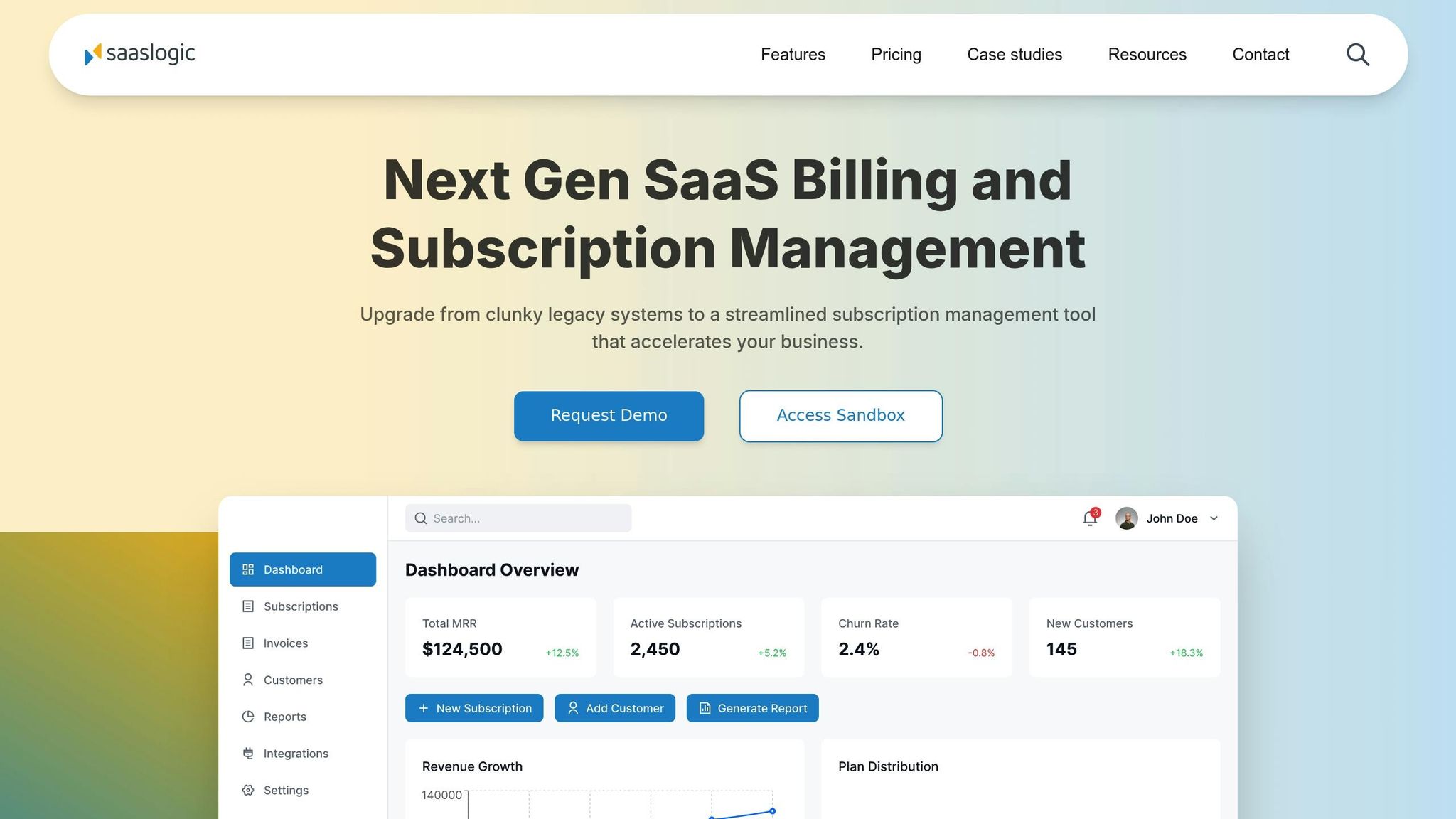
SaaSLogic is built for businesses that rely on hybrid subscription models. It enables pricing experiments without disrupting your current billing infrastructure, making it an ideal tool for testing AI-driven models across different customer segments.
The platform uses AI to segment users based on behavior, demographics, or purchase intent, then applies tailored pricing strategies to each group. For example, premium rates can be set for high-frequency users, while discounts can be offered to at-risk customers to prevent churn. SaaSLogic also includes demand forecasting, which helps predict when to adjust prices based on market changes or competitor actions. As Akshay G Bhat, Technical Content Writer at SaaSLogic, explains:
"AI now makes dynamic pricing accessible for all business sizes".
| Feature | Stripe Billing | SaaSLogic |
|---|---|---|
| Primary Focus | Global payments & usage-based pricing | Hybrid subscription management & testing |
| AI Capability | Smart Retries & revenue recovery | Segmentation & demand forecasting |
| Pricing Logic | Metered, Tiered, Graduated | Personalized, Competitor-driven |
| Integration | API & no-code options | Specialized SaaS/Membership connectors |
Measuring AI Dynamic Pricing Performance
To understand how well your AI-driven pricing system is working, focus on metrics like revenue per member, churn rate, conversion rates, and customer lifetime value (LTV). These indicators reveal if your pricing strategy is increasing revenue without alienating your customers. Another key metric is average order value (AOV), which can show whether dynamic offers are prompting customers to make upgrades during high-demand periods.
It’s also crucial to keep an eye on customer sentiment. A striking 62% of consumers associate dynamic pricing with "price-gouging". If customers feel exploited, even profitable strategies can backfire. Operational efficiency metrics, such as time saved and system response speed, are equally important to track. Together, these metrics ensure that your dynamic pricing approach aligns with both revenue goals and operational benchmarks.
Key Performance Metrics
Once your AI pricing tools are in place, monitoring specific metrics helps confirm their effectiveness. AI-powered pricing has the potential to increase profit margins by up to 10%, boost AOV by 13% during peak periods, and improve repeat buyer conversion rates by 5%. Retailers using AI pricing systems have reported gross profit gains of 5% to 10%, all while enhancing customer perceptions of value.
"The real game-changer wasn't just flexible cost structure in its traditional form, but AI-powered dynamic pricing – a sophisticated, intelligent approach and a powerful engine for growth."
To measure the direct impact of AI pricing, conduct A/B tests. Compare a group using AI-driven pricing with a control group sticking to static pricing - this isolates the actual revenue lift. Additionally, leverage AI to analyze price elasticity, finding the optimal pricing point that maximizes revenue without spiking churn. Automating notifications for customers nearing usage limits or tier changes can also prevent frustration and unexpected charges.
Before and After AI Comparison
To evaluate the success of AI-powered pricing, compare your key metrics before and after implementation. For instance, a Chinese online retailer specializing in baby products introduced an AI pricing model for its top 30 SKUs in late 2023. By forecasting demand based on competitor stockouts and consumer preferences, the company achieved an 11% revenue increase while maintaining a 10% gross margin. Similarly, a U.S. online furniture retailer conducted a month-long pilot involving over 10,000 products. By testing 3% price variations to gauge elasticity, they saw a 15% revenue boost and a 10% profit increase.
Here’s a side-by-side comparison of key metrics under manual/static pricing versus AI-driven dynamic pricing:
| Metric | Manual/Static Pricing | AI Dynamic Pricing |
|---|---|---|
| Profit Margin | Fixed/Static | Up to 10% improvement |
| Average Order Value | Constant | Up to 13% increase during peaks |
| Conversion Rate | Baseline | ~5% increase for repeat buyers |
| Gross Profit | Baseline | 5% to 10% increase |
| Revenue Growth | Linear | ~3% increase in turnover |
| Response Time | Days/Weeks | Real-time |
To keep your pricing strategy effective, review your AI system at least every six months - or even quarterly - to adapt to shifts in market trends and customer behavior. Also, monitor "guardrail" metrics in real-time. If revenue drops sharply or churn rates exceed a predetermined threshold, stop the experiment immediately.
Conclusion
This guide has shown how AI is reshaping membership pricing strategies. Dynamic pricing, powered by AI, not only increases revenue but also improves customer retention. By analyzing millions of data points in real time, AI adjusts fees based on demand and individual subscriber behavior. This eliminates the need for hours of manual work on spreadsheets or competitor analysis - an essential advantage for faceless YouTube channels and digital creators managing diverse audiences.
The financial benefits are hard to ignore. Companies using AI-driven pricing have reported revenue increases of 10% to 25%. In the telecommunications sector, real-time pricing systems that handle over 1.2 million decisions daily have led to a 16.8% boost in average revenue per user (ARPU), all while maintaining customer satisfaction scores above 4.2 out of 5.0.
AI pricing also tackles subscriber churn by identifying and addressing price-sensitive segments before they cancel. For instance, the system can automatically offer targeted discounts or optimized plans to retain at-risk members while maximizing value from high-usage subscribers willing to pay premium rates. This personalized approach has reduced pricing-related complaints by 23.5%. These tailored strategies align perfectly with scalable membership models and the compute-aware pricing methods previously discussed.
For creators, dynamic pricing aligns membership fees with compute costs, ensuring profit margins are protected. This approach keeps subscriptions affordable for casual users while maintaining financial sustainability. As Erik Knight from PeakCommerce puts it:
"The future of pricing in the subscription economy is dynamic, data-driven, and personalized - and AI is the key to unlocking its full potential".
To make the most of AI pricing, creators should implement guardrails, conduct quarterly reviews of AI models, and maintain clear communication with subscribers. When done right, AI pricing systems not only drive revenue but also enhance customer satisfaction, allowing creators to focus on what they do best - creating content.
FAQs
How does AI-driven dynamic pricing enhance customer satisfaction?
AI-powered dynamic pricing transforms the way businesses connect with their customers by using real-time data - like market trends, shopping habits, and individual preferences - to create pricing that feels fair and personalized. This method helps customers feel appreciated, as prices are adjusted to align with their needs and expectations.
By offering tailored deals, dynamic pricing enhances the sense of value customers perceive, leading to stronger engagement and loyalty. When people trust that prices are designed with their interests in mind, they’re more likely to return and build a lasting relationship with the brand.
How can I set up AI-powered dynamic pricing for memberships?
To implement AI-driven dynamic pricing for memberships, start by gathering and organizing data related to customer behavior, demand trends, and historical pricing patterns. This data forms the foundation for training an AI model - whether it's a machine learning or reinforcement learning algorithm - to analyze and predict the best pricing strategies.
With the model trained, the next step is to build the data pipelines and infrastructure required for smooth deployment. Establish clear pricing rules and boundaries to ensure your prices stay competitive and align with your business objectives. Once everything is in place, integrate the AI system into your membership platform to enable real-time price adjustments. Be sure to monitor the system’s performance regularly and fine-tune the model as necessary.
This method allows businesses to adapt to market shifts effortlessly while boosting recurring revenue.
How can businesses use AI-driven pricing while ensuring fairness and maintaining customer trust?
To maintain trust and uphold ethical standards, businesses should integrate transparent guidelines and human oversight into their AI-powered pricing strategies. This means establishing clear rules to ensure fairness, routinely auditing pricing decisions, and openly communicating how prices are calculated.
By providing straightforward explanations for pricing and keeping a close eye on elasticity data, companies can strengthen customer confidence while utilizing AI to improve revenue. Blending advanced technology with ethical practices helps ensure pricing stays competitive without sacrificing trust.
Related posts
LongStories is constantly evolving as it finds its product-market fit. Features, pricing, and offerings are continuously being refined and updated. The information in this blog post reflects our understanding at the time of writing. Please always check LongStories.ai for the latest information about our products, features, and pricing, or contact us directly for the most current details.