
Best AI Filmmaking Tools in 2026 (For Storytellers Who Actually Care About Quality)

Everyone's talking about AI video. But most of the conversation is about the wrong thing.
The benchmarks are all clip-based: eight seconds of a dog walking through a forest, a product shot that holds together without warping, a face that doesn't melt by frame 12. That's a useful bar for generating footage. It's not filmmaking.
If you're trying to make something with a beginning, middle, and end — a narrative, a series, a music video with a consistent visual world — you're not looking for the tool with the best eight-second clip. You're looking for something that lets you direct, not just generate.
That distinction matters more in 2026 than it ever has. The clip generators have gotten genuinely impressive. But the gap between generating footage and producing a film is still enormous, and almost no tool is built to close it.
This list is for filmmakers, storytellers, and serious creators — not people chasing short-form virality. The tools are ranked by how useful they are to someone with a story to tell, not just a prompt to run.
What Separates a Filmmaking Tool from a Clip Generator
Before the list, it's worth naming the actual problem.
Most AI video tools give you raw material. You get a clip. Maybe a great clip. But to turn that into a film, you still need to:
- Maintain character consistency across dozens or hundreds of separate generations
- Write and manage a script
- Add voiceover and sync it to scenes
- Edit everything together in a separate tool
- Start the whole process over for the next episode
The better filmmaking tools try to handle some or all of that pipeline. The best ones let you define a world once — your characters, your visual style, your tone — and generate within it indefinitely.
That's what this list is actually evaluating.
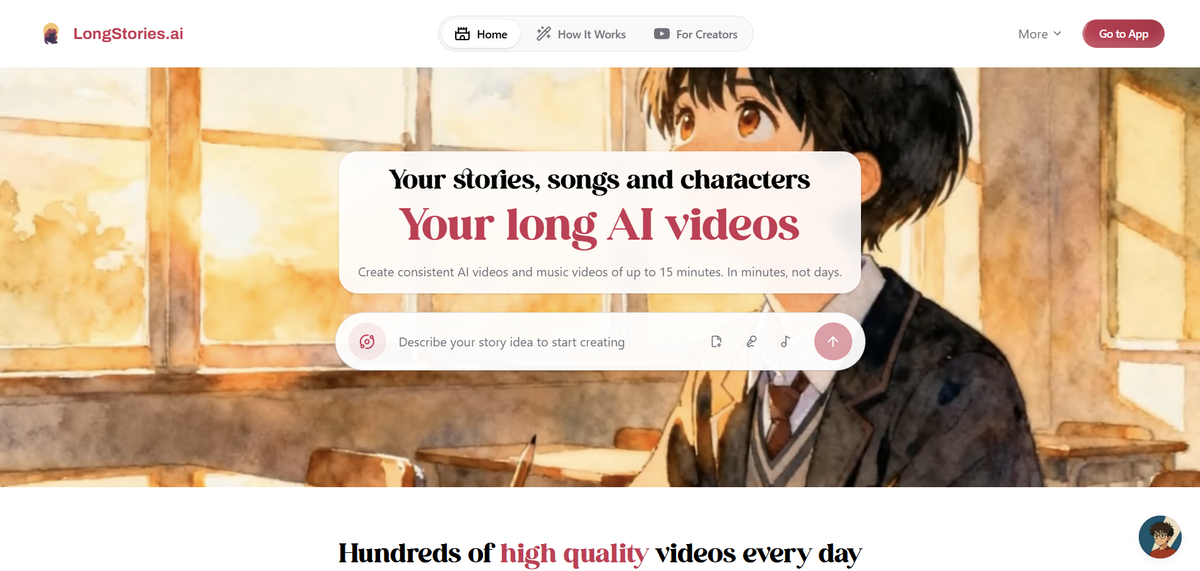
1. LongStories.ai — Best for Episodic Series, Long-Form Narrative, and AI Music Videos
Starting price: $59/month
Best for: Storytellers, episodic creators, AI music video makers, indie animators
LongStories isn't trying to make the most cinematic eight-second clip. It's built around a different premise entirely: that a filmmaker needs a persistent world, not just a generation engine.
The core of the platform is the Universes system. Before you generate a single frame, you define your characters — their appearance, voice, personality, narrative role. You define your visual style, your setting, your tone. That becomes your Universe. Every video you make within it inherits everything you've defined, automatically, without re-prompting from scratch.
That's what makes it different from every other tool on this list. You're not fighting character drift across 40 separate generations. You're directing within a world you've already built.
From there, the production pipeline handles the rest. You can start from a prompt, a full script, a song, or even a voice recording. The platform generates scenes, voiceover, sound design, and timing — all in one workflow. Long-form output up to 15 minutes means you can produce complete episodes, not just clips that need stitching.
Three animation tiers give you production flexibility:
- No Animation — storyboard mode, useful for testing narrative flow before committing credits
- Fast Animation — the right balance for regular weekly publishing
- Pro Animation — full orchestration with integrated sound design, reserved for premium releases or series finales
For creators working at volume, the bulk editing feature lets you push changes across multiple videos at once — update a character's look or adjust a scene element across an entire season without touching each video individually. The API and ZIP asset export (available on Pro and Creator plans) mean you can bring your scenes into Premiere or DaVinci for final polish if you want it.
The music video use case deserves a specific mention. LongStories handles music video creation as a native workflow — syncing visuals to a song's structure with character and style consistency throughout. That's genuinely rare. Most clip generators require you to build that entirely in post.
Real creators are already using it to run serialized channels, producing two to three episodes per week with a consistent cast and world — without an animation team. The platform's approach to story coherence — tracking character traits, visual identity, and narrative continuity across scenes — solves the problems that make long-form AI video genuinely hard.
The honest limitation: LongStories is optimized for the full pipeline, not for maximalist cinematic control over individual shots. If you need to keyframe a specific camera move or obsess over a single frame's lighting, you'll want to supplement with something like Runway or export assets for post-production.
Bottom line: If you're building a world and telling a story in it — episodic series, narrative films, animated shorts, music videos — this is the only platform built from the ground up for that job.
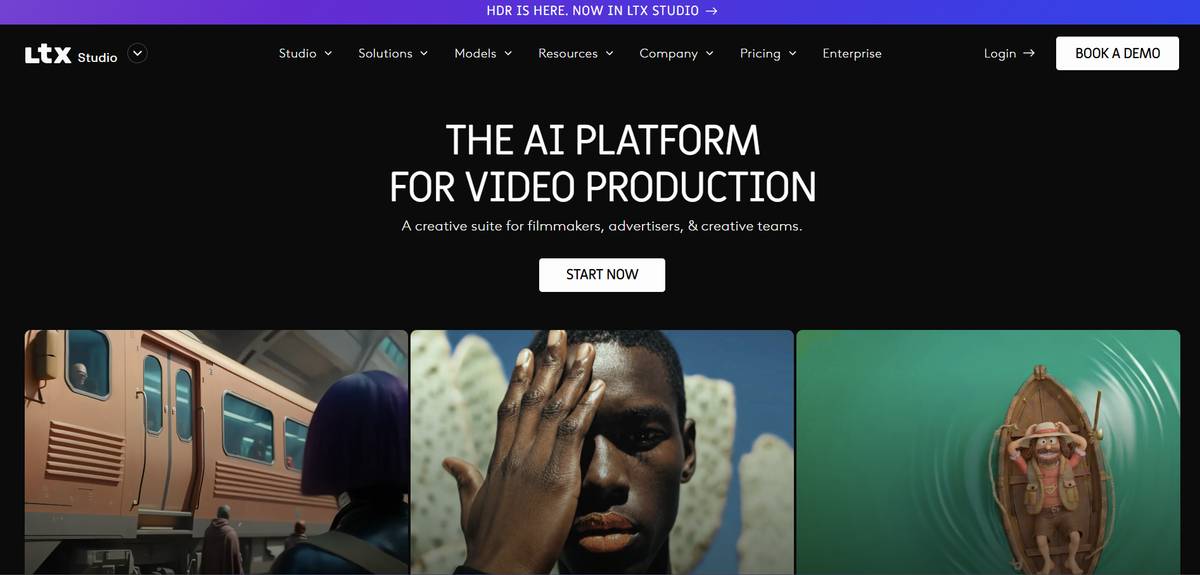
2. LTX Studio — Best for Scene-Level Cinematic Control
Starting price: Varies (no public pricing)
Best for: Filmmakers who want directorial control over every shot
LTX Studio is what you'd use if you want to be the cinematographer, not just the writer. It offers a full suite for scripting, storyboarding, timeline editing, and sound design — with tools for controlling camera movement, keyframing, and visual continuity at the scene level.
The platform's strength is precision. The script editor links text directly to visual storyboards, so when you change a line of dialogue, the corresponding visual context updates too. For advertising agencies and filmmakers who need fine-tuned control over every shot, that kind of link between narrative and image is genuinely useful.
The tradeoff is overhead. LTX Studio is more technical, less automated, and not designed for high-volume production. There's no Universes equivalent — no way to define a persistent world and spin up new content within it quickly. If you're producing one well-crafted short film, that's fine. If you're running a channel and publishing weekly, the workflow starts to drag.
Best used for: Pre-production, storyboarding, high-craft short films, advertising and agency work.
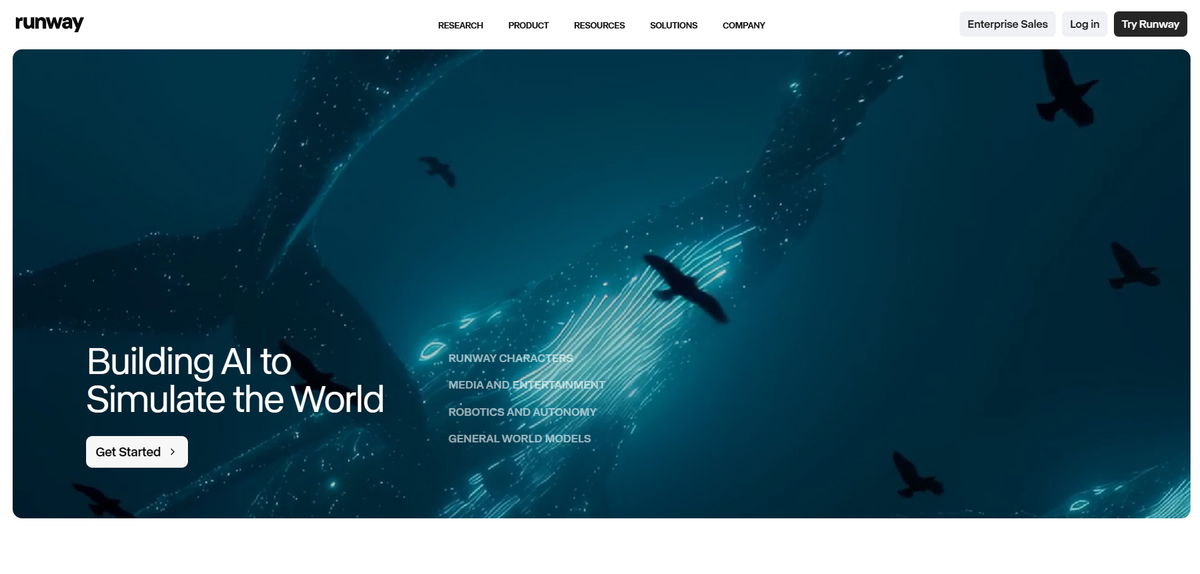
3. Runway Gen-4.5 — Best for Reference-Based Cinematography
Starting price: ~$15/month
Best for: Brand content, professional creative teams, reference-driven production
Runway is the closest thing to an industry standard for AI filmmaking among professional creative teams. Gen-4.5 introduced reference image support that lets you lock in a character's visual identity from frame one — feeding the model a reference image before each generation and getting consistent results across shots.
The camera controls are legitimately cinematic. Runway understands concepts like handheld feel, pan, truck, timed beats — the vocabulary of actual cinematography. For teams that need brand-safe output with predictable character appearance across a campaign, it's the most reliable tool available.
Where it falls short: you're still working with individual clips. Runway gives you excellent footage. Turning that footage into a film is your job — in Premiere, DaVinci, or wherever you edit. There's no narrative pipeline, no persistent character system in the LongStories sense, and no end-to-end automation.
For a creative team with dedicated editors and a post-production workflow, that's fine. For a solo creator trying to publish an episode every week, it's a lot of manual work.
Best used for: Marketing and brand content, cinematic short films with a full editing workflow, reference-driven character work.
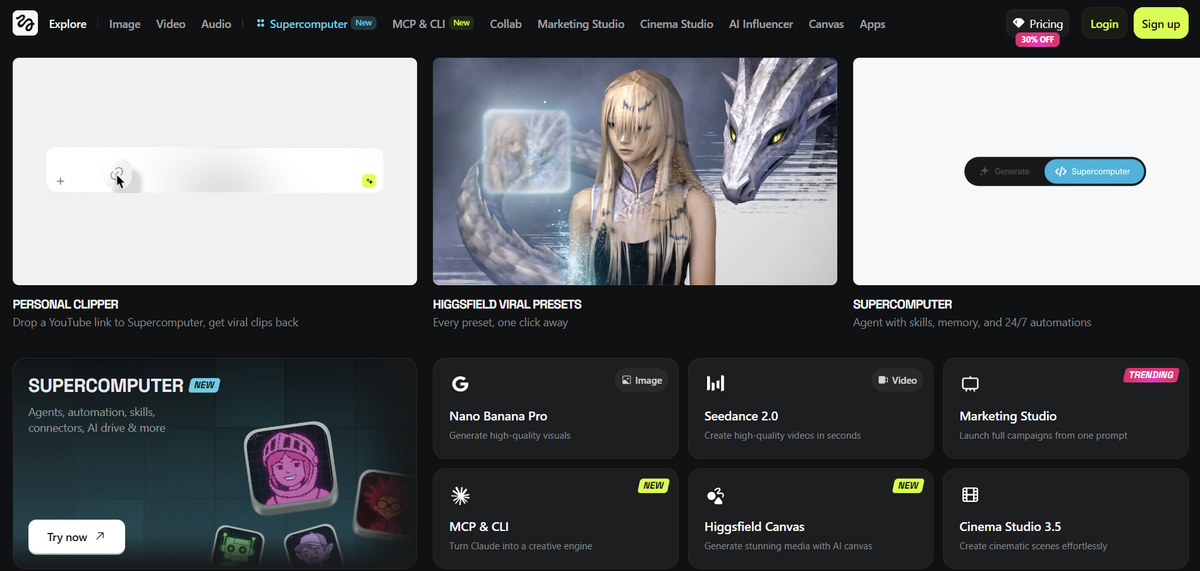
4. Higgsfield — Best Raw Cinematic Output Per Shot
Starting price: Varies
Best for: Filmmakers who prioritize shot-level visual quality above all else
Higgsfield consistently shows up in filmmaker roundups for one reason: the raw output quality per generation. For individual shots that need to be genuinely cinematic — the hero moment in an action sequence, the establishing shot that sets a tone — it produces results that hold up against any model in the space.
It has no narrative pipeline, no character system, and no automation. It's a pure generation tool for people who know exactly what they want from a shot and need the best possible output.
Think of it as a complement to a broader workflow, not a standalone filmmaking platform. Pair it with LongStories for narrative structure and character continuity, then use Higgsfield for specific shots where maximum visual quality matters.
Best used for: Supplementing a larger workflow, hero shots, visually demanding sequences.
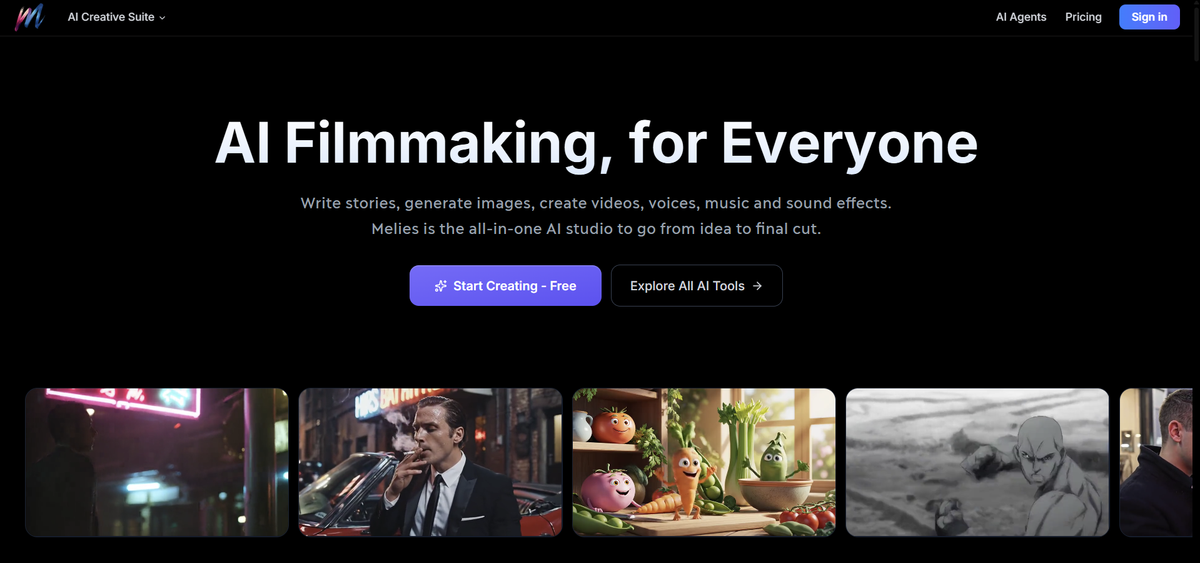
5. Melies — Best End-to-End AI Film Pipeline for Fiction
Starting price: Varies
Best for: Writers and fiction filmmakers who want to go from idea to screen
Melies is the most ambitious tool on this list in terms of scope. It's built around the full five-stage filmmaking workflow: idea → screenplay → storyboard → video generation → sound. The platform's AI movie idea generator builds complete concepts step by step — world, characters, conflict, logline, synopsis — and feeds them into a structured screenwriting tool before a frame is generated.
For someone who thinks like a writer first and wants the technology to serve the story rather than the other way around, the approach is compelling. You're working within a familiar creative process, not learning a new interface.
The honest caveat: Melies is newer than most tools on this list and less proven at scale. The concept is right, but the execution is still catching up to LongStories in terms of output quality and production volume. Worth trying, especially if fiction and screenplay-first storytelling is your primary mode.
Best used for: Short fiction films, writers transitioning into visual storytelling, concept development.
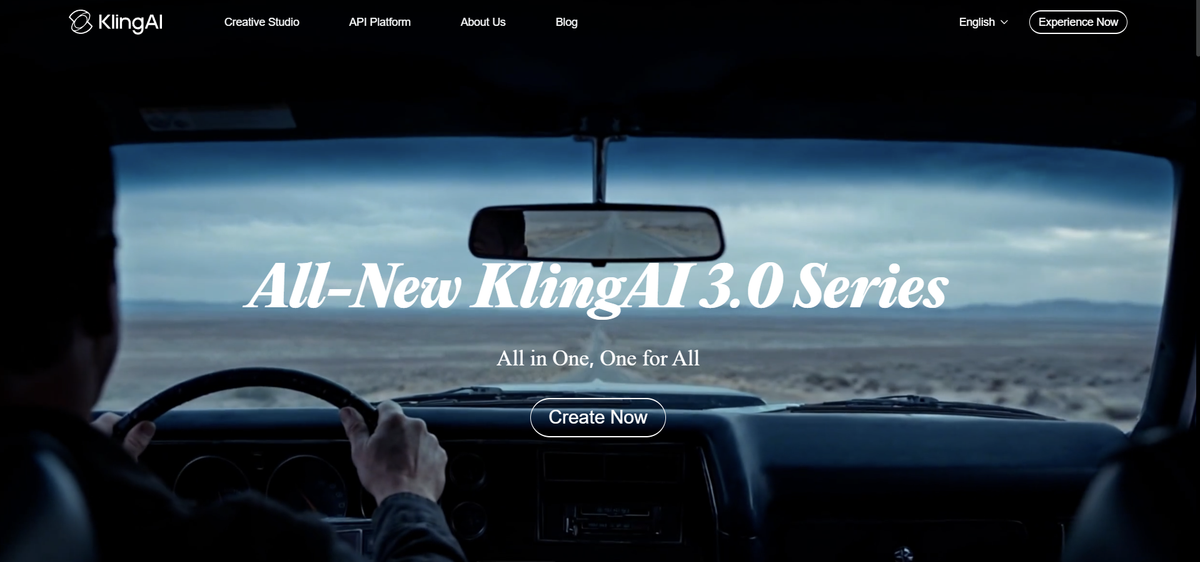
6. Kling 3.0 — Best High-Motion Shots on a Budget
Starting price: ~$10/month, or ~$0.07/second of generated video
Best for: Action sequences, physically complex shots, budget-conscious production
Kling 3.0 is the value play for cinematic output. Version 3.0 introduced multi-shot sequences with subject consistency across camera angles — a meaningful technical step for anyone building a narrative from individual clips. The physics modeling is strong, especially for high-motion content: running, action sequences, complex movement.
At roughly $0.07 per second of video, it's substantially cheaper than comparable tools. For a filmmaker generating at volume and willing to do the assembly work, the math is attractive.
It's still a clip generator. You're building your film from individual shots in post. But for supplementing a workflow — especially for action-heavy sequences that need physical realism — Kling is hard to argue against at the price.
Best used for: Action sequences, supplementing a larger workflow, budget-sensitive production that prioritizes volume.
A Note on What AI Filmmaking Actually Requires
The clip generators will keep getting better. Resolution will go up, physics will improve, faces will stop drifting, audio sync will tighten. All of that is already happening fast.
But the fundamentals of filmmaking aren't really about clip quality. They're about continuity — the same character showing up in scene 12 the same way they looked in scene 1. They're about pacing — knowing when a scene ends and the next one needs to breathe differently. They're about world-building — the feeling that every shot belongs to the same story.
Those are the problems LongStories is actually solving. The documentary format, the fantasy genre, the music video, the episodic series — these are all available as native workflows, not workarounds.
The other tools on this list are genuinely good at what they do. But they're giving you raw material. What you do with it is still up to you.
LongStories is giving you a production pipeline. That's a different thing.
LongStories is constantly evolving as it finds its product-market fit. Features, pricing, and offerings are continuously being refined and updated. The information in this blog post reflects our understanding at the time of writing. Please always check LongStories.ai for the latest information about our products, features, and pricing, or contact us directly for the most current details.