
How Teams Use Real-Time AI Animation for Faster Production
Animation teams are transforming their workflows with real-time AI tools, significantly cutting production times and boosting efficiency. These systems provide instant feedback during animation, lighting, and rendering processes, allowing teams to collaborate seamlessly and make adjustments on the spot. Here's what you need to know:
- Faster Production: AI automates repetitive tasks like rotoscoping, lip-syncing, and generating in-between frames, reducing timelines by 40–60%.
- Instant Feedback: Real-time rendering and AI-powered tools enable teams to preview updates immediately, eliminating delays caused by traditional rendering queues.
- Improved Collaboration: Shared workspaces and cloud-based platforms let distributed teams work together in real-time, streamlining decision-making.
- Evolving Roles: Animators now focus on directing AI-driven outputs, while technical directors manage AI systems and pipelines.
- Cost-Effective for Small Teams: Platforms like LongStories.ai help independent creators produce high-quality content with minimal resources.
These advancements are reshaping animation workflows, enabling faster, more flexible production while maintaining high-quality results.
How to Use Real-Time Cinematic Workflows in VFX & Animation
Research Findings: How AI Animation Changes Team Workflows
Research and case studies reveal that integrating real-time AI animation into production pipelines has significantly accelerated workflows. Teams working on feature films, streaming content, and digital media projects report production timelines shrinking by 40–60% compared to traditional methods.
AI tools are reshaping how teams are organized, how they communicate, and how tasks are divided. Instead of waiting days or weeks for renders and revisions, teams now operate in a continuous feedback loop. Changes appear instantly, allowing multiple departments to collaborate in real time.
Time Savings and Efficiency Gains in AI Animation
In the world of video production, especially for explainer and marketing content, AI tools have cut production times by up to 50%. Tasks that once took days, like layout and blocking, are now completed in hours. AI tools can auto-generate camera movements and populate scenes with background elements, streamlining the process. For character animation, AI-assisted motion generation and automated in-betweening save animators from hours of manual keyframing by letting the system handle smooth transitions between key poses.
Other areas like lighting and rendering have also seen dramatic improvements. Disney’s Hyperion system and NVIDIA OptiX, which use machine learning for denoising, have reduced multi-hour rendering processes to just minutes. In effects and compositing, tools like Runway ML’s background remover have made tasks like rotoscoping far faster. For instance, the visual effects team on Everything Everywhere All at Once used this tool to cut weeks of manual work into just a few hours.
These advancements don’t just save time - they open the door for more creativity. Teams can now experiment with different lighting setups, camera angles, and motion styles all within a single session. In the design phase, AI generative tools can produce dozens of variations for characters or environments based on simple prompts or sketches. This broader range of options often leads to richer storytelling and more polished visuals.
Team Roles and Workflow Changes
With production moving faster, traditional roles are evolving. Repetitive tasks are increasingly handled by AI, freeing up animators to focus on directing AI-driven motion and refining emotional details in characters. Their role has shifted toward defining key poses and emotional beats while the AI handles the transitions.
Technical directors now spend more time configuring and maintaining AI models, often taking on responsibilities similar to AI pipeline engineers. They integrate machine learning into rendering, simulation, and motion capture workflows. Editors and finishing artists are also leveraging AI for tasks like rough cuts, background removal, and procedural effects. This allows them to concentrate on storytelling and visual polish.
The demand for hybrid specialists - such as AI tools experts, real-time pipeline supervisors, and AI look-development artists - is growing. These roles blend creative and technical skills, blurring the lines between traditional positions like animator, technical director, and pipeline engineer.
Real-time AI has also made parallel workflows more common. For example, layout and animation teams can begin refining shots before final assets are ready, as AI generates temporary placeholders that can be swapped out later. Similarly, lighting teams can start tests earlier thanks to real-time rendering and denoising. Processes like background removal, rough compositing, and assembly edits can now occur simultaneously, enabling producers to adopt more agile workflows with shorter sprints and flexible task management.
Collaboration is evolving, too. Instead of relying on batch-based reviews, real-time AI tools enable live, continuous feedback sessions. Creative adjustments can now be made on the spot, reducing the need for formal review rounds. Shared, cloud-hosted AI tools allow distributed teams to work together in real time, while meetings have shifted from long weekly sessions to shorter, more frequent check-ins that speed up decision-making.
However, these advancements come with challenges. Over-reliance on AI can lead to quality control issues, as subtle artifacts in AI outputs may go unnoticed without careful human oversight. Additionally, there’s concern that automation might erode traditional skills, creating a gap as artists and engineers adapt to these new technologies. Data management and intellectual property issues have also arisen, especially with cloud-based AI services, leading some studios to develop in-house tools with stricter controls .
Real-time AI animation is not just about working faster - it’s about changing how teams collaborate and create. Studios embracing these tools are producing high-quality content with smaller teams and tighter deadlines, redefining what’s possible in the industry.
Collaboration Patterns in Real-Time AI Pipelines
As teams embrace real-time AI animation, collaboration methods are evolving alongside efficiency gains and shifting roles. This technology enables instant feedback and ongoing collaboration, significantly shortening production timelines and accelerating creative decisions.
One standout approach is the iterative preview cycle, where animators, directors, and producers come together to review live renders in shared sessions. Instead of waiting for weekly updates, teams now conduct micro-sprint reviews, syncing hourly or twice daily. This keeps everyone on the same page and helps catch potential issues early in the process.
Another trend is the blurring of traditional roles. Artists may now handle light technical tasks, such as guiding AI systems or managing automated cleanup, while technical directors take a more hands-on approach to refining visual styles. These overlapping responsibilities make review sessions feel more like creative brainstorming sessions, reducing the fatigue that often comes with repeated revisions.
Shared Workspaces and Real-Time Feedback
Shared workspaces form the backbone of real-time collaboration in AI-driven animation. These platforms allow team members to trigger AI updates and view live results, creating a seamless workflow.
For these workspaces to function effectively, teams establish clear guidelines. They may enforce turn-taking for who "drives" the session, use concurrent voice or video calls, and set time limits on live tweaking sessions - such as capping lighting adjustments at 30 minutes to avoid endless iterations. Documenting changes during sessions is also critical, especially for teams spread across time zones. For example, U.S.-based teams often schedule one overlapping "live block" daily, while offshore collaborators rely on recorded viewport captures and detailed notes.
Real-time feedback covers multiple aspects, including instant previews of lighting, materials, and motion; AI-enhanced audio and lip-sync checks; and rapid adjustments to timing, pacing, and camera angles. Case studies show that production timelines can shrink by as much as 40–60%. One commercial studio, for instance, reported a 60% reduction in production time for motion-heavy sequences thanks to instant previews. Teams also experience fewer full revision cycles - typically three to four instead of six to eight - because creative leads can approve changes as they happen.
Cloud-based platforms are further enhancing these collaborative efforts, uniting remote teams under a single virtual roof.
Cloud-Based AI Animation Services
Cloud-based AI services complement shared workspaces by centralizing assets and streamlining workflows for remote teams. These platforms ensure that collaborators, regardless of their location, can access the same scenes, character rigs, and AI models without needing identical hardware setups.
Key features include role-based access control for vendors and freelancers, automatic versioning of scenes and outputs, and centralized storage to maintain consistent styles and character designs. Cost dashboards in U.S. dollars help teams manage budgets, while API or web interfaces make it easy for both technical and non-technical users to trigger AI tasks. By eliminating the need to transfer large files and solving "it works on my machine" issues, these services allow teams to run overnight AI jobs in one region and review the results the next morning in the U.S.
However, cloud-based platforms come with challenges. For instance, slight variations in prompts or models can lead to inconsistencies in character or style, and version mismatches can occur when some team members use outdated assets. To address these issues, teams rely on centralized style and character "bibles" as reusable presets, schedule regular updates with testing, and enforce strict naming conventions.
Platforms like LongStories.ai, designed for long-form video production, help teams maintain consistency across episodes or campaigns. These tools allow teams to define reusable universes with stable characters, styles, and voices, all while benefiting from real-time generation and bulk editing.
Examples of Parallel Workflows
AI tools have revolutionized traditional workflows, allowing animation, lighting, and editing to happen simultaneously rather than sequentially. Teams often divide their pipelines into synchronized tracks: animators use AI-assisted motion tools for performance and blocking, lighting artists employ real-time rendering and AI-based systems, and editors assemble rough cuts with AI tools while shots are still being refined.
To keep these parallel workflows aligned, teams establish critical lock points, such as finalizing performance or camera setups, to streamline changes.
For example, during the production of the Oscar-winning film Everything Everywhere All At Once, the VFX team used Runway ML's AI tools for background replacement and green screen work in the intricate "rock universe" scene.
VFX artist Evan Halleck noted that using Runway's AI for rotoscoping and masking reduced weeks of manual work to just hours, enabling the team to focus on creative refinement and collaboration.
Similarly, Industrial Light & Magic utilized AI-powered tools like Mocha Pro and Silhouette to automate rotoscoping, cutting what would have been weeks or months of manual work down to hours. This freed up artists to concentrate on more creative aspects of production.
Real-time rendering engines like Unreal Engine, when paired with AI tools, let animation teams preview complex scenes with realistic lighting and effects instantly. This capability allows for faster, more collaborative decision-making both on set and in the studio, enabling directors and cinematographers to see near-final results without waiting for overnight renders.
Adopting parallel workflows has also led to new collaboration habits. Many teams now hold short daily review sessions, lasting 15–30 minutes, instead of lengthy weekly meetings. They prepare curated AI-generated options in advance, record sessions for documentation, and assign note-takers to log approved settings and decisions. This shift from a "batch-and-wait" model to a "co-create-and-decide" approach reduces the need for extensive review rounds and minimizes the reliance on in-person meetings - a significant advantage for U.S. teams working with distributed collaborators.
These streamlined workflows showcase the practical ways AI is transforming production processes.
sbb-itb-94859ad
Case Studies: Real Applications of AI Animation in Teams
Looking at how AI animation is being used today, it's clear that teams - whether they're large studios or small independent creators - are rethinking how they approach production. These examples show how AI is speeding up workflows, cutting costs, and changing how teams collaborate.
Large Studio Example: Disney's AI-Enhanced Productions
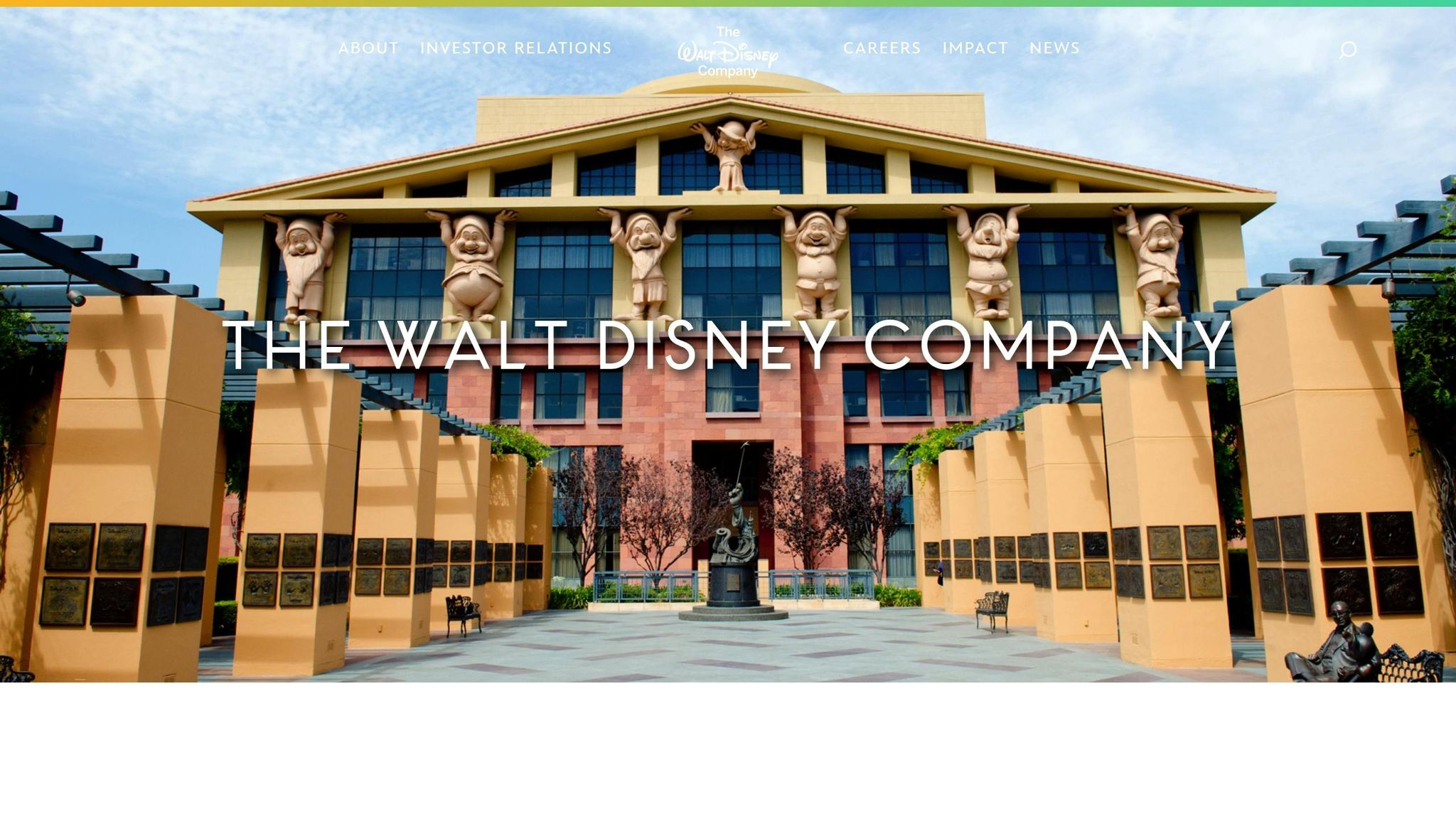
Disney has taken AI to the next level in its animation process, using proprietary tools to handle complex tasks. Two standout examples are Swoop, which simulates natural elements like snow and water, and Hyperion, an AI-powered lighting and rendering engine that provides instant feedback on lighting changes.
These tools have transformed Disney’s day-to-day operations. Teams across layout, lighting, FX, and animation can now collaborate more effectively, reviewing shots more frequently and trying creative ideas that were previously unfeasible due to long rendering times.
The speed improvements are undeniable. Hyperion’s AI-assisted rendering has slashed lighting and rendering times by removing the delays caused by test renders. This allows teams to complete more iterations in a single day. Similarly, AI-driven simulations for elements like snow, hair, and crowds have reduced the manual work involved, helping teams meet deadlines with fewer overtime hours and lower costs per shot. While Disney doesn’t share exact numbers, industry studies suggest these AI tools have helped cut production timelines by weeks and saved significant amounts on rendering budgets.
Collaboration has also improved. Directors and supervisors can see updated lighting and effects within hours, which shortens feedback loops. This enables animators, lighters, and FX artists to work on the same shot simultaneously, trusting the AI to handle many technical challenges automatically. This is a big shift from the traditional method of passing work between departments in sequence.
The success of these tools at Disney shows how AI can change the game for animation, even for smaller teams.
Independent Studio Use Case
For small studios, the challenges are different - they need to produce quality content with limited resources. AI-first platforms are helping these creators achieve what was once out of reach.
Take platforms like LongStories.ai, for example. These tools let small teams choose from different animation levels - No Animation, Fast Animation, or Pro Animation - based on their budget and deadlines. Bulk editing features make it easy to update episodes or series in batches.
By automating animation, voiceovers, and editing, these platforms free up creators to focus on scripting and storyboarding. Producers can manage a steady flow of long-form videos (up to 10 minutes) on a regular schedule, which is key for platforms like YouTube where frequent posting drives growth and revenue. API integration even allows these tools to connect with a studio’s project management systems, enabling near-instant updates and rendering for ongoing projects.
The efficiency gains are huge. Independent studios using AI tools have completed projects that would have required much larger teams in the past. For instance, Wonder Dynamics used AI to handle character animation and scene rendering, producing a full animated feature with a small team while dramatically reducing production time and costs. Tasks that used to take weeks can now be done in days or even hours, as AI models handle repetitive tasks and generate near-final frames on demand.
By bundling tools for scripting, voice synthesis, and editing, these platforms allow one or two people to manage the entire production process for long-form episodes. This lets small teams shift their budgets away from labor-intensive tasks and toward story development and marketing. The result? Independent creators can compete with larger operations on speed and output.
Research Lab Developments
While studios focus on commercial applications, research labs are pushing AI animation into new territory, especially for virtual reality (VR) and interactive experiences where traditional motion capture is too slow or expensive.
Labs are now using AI-based motion capture and synthesis, which relies on neural networks to infer full-body motion from fewer sensors - or even just a single camera. These systems can map a performer’s movements onto digital avatars in real time, eliminating the need for the lengthy record-process-retarget cycle. This real-time capability is a game-changer for user studies and interactive experiments.
Generative models are also gaining traction. Researchers can now create motion sequences based on simple commands like "walk to the table and sit", skipping the need for manual animation or motion capture for every variation. This speeds up iteration dramatically, allowing new behaviors or designs to be tested in hours instead of days.
The benefits are practical and measurable. AI-based motion capture systems often require fewer cameras, no dedicated capture spaces, and minimal setup time. Labs can now use ordinary rooms or VR environments for motion capture, cutting down on logistical overhead and allowing shorter, more frequent sessions. This flexibility fits neatly into standard research schedules.
Costs are also dropping. Expensive multi-camera setups are being replaced by machine-learning models that run on GPUs or cloud systems, which many labs already have for other research. Faster experiment cycles mean researchers can test more conditions and participants within the same timeframe, maximizing the value of their resources.
Interestingly, the advancements made in research labs are already influencing commercial tools. The same AI techniques developed for academic purposes are now appearing in platforms used by small studios and independent creators, bridging the gap between cutting-edge research and everyday production tools.
Adding Real-Time AI Animation to Existing Pipelines
Integrating AI tools into established animation workflows can simplify processes and save time. For most animation teams, the goal isn’t to replace existing tools but to enhance them. By weaving AI into current applications or connecting it to cloud-based services, teams can improve efficiency without disrupting their familiar workflows.
Start by pinpointing problem areas - like rendering delays, repetitive tasks, or maintaining character consistency across episodes. Once you’ve identified where AI can help, choose the integration method that aligns with your team’s technical setup and workflow. Here are three effective strategies for incorporating AI into your pipeline.
Embedding AI Tools into DCC Software
For teams using programs like Maya, Blender, or Unreal Engine, AI plugins designed for these platforms allow animators to stay in their comfort zone. These tools eliminate the need to export files into separate applications, keeping everything streamlined.
For instance, plugins for tasks such as rotoscoping, lip-syncing, and rendering can be directly integrated into your Digital Content Creation (DCC) software. A great example is Industrial Light & Magic, which adopted AI-driven tools like Mocha Pro and Silhouette to automate rotoscoping. This reduced a process that once took weeks or months to just a few hours. Since these tools operate as plugins, artists didn’t need to learn new software - they simply gained enhanced functionality within their usual workflow.
To ensure success, confirm that the AI plugins are compatible with your software. Also, establish clear protocols for reviewing AI-generated content. Define who will evaluate the output, what quality standards it must meet, and how it will be versioned alongside manually created assets.
Cloud-Based and API-Driven Workflows
Cloud platforms offer a flexible alternative, especially for teams managing large-scale content production or collaborating remotely. These services handle AI processing on remote servers, accessible through web interfaces or APIs, removing the need for local installations.
This approach provides scalable processing power without requiring major investments in hardware. Teams can pay for what they use, making it an ideal solution for smaller studios or independent creators. For example, platforms like LongStories.ai enable creators to build reusable "Universes" that define character styles, voices, and other elements. These templates can then be applied across multiple projects, ensuring consistency without the need for constant manual adjustments. In November 2025, creators used this platform to produce stories like "The Great Kraken Scare" and "Dancing Plague of 1518", all within "Professor Time's Universe."
API access adds another layer of efficiency for teams with custom workflows. Instead of manually uploading files, teams can integrate AI services directly into their production pipelines. For example, scripts can automatically trigger animation generation, voiceover synthesis, or rendering, cutting down on repetitive tasks.
A practical example of this approach is seen in the VFX work for Everything Everywhere All At Once. VFX artist Evan Halleck used Runway ML’s cloud-based AI tools to perform background removal on a complex scene. This cloud solution reduced weeks of manual rotoscoping to just hours, enabling a small team to achieve results typically requiring a much larger crew.
When adopting cloud-based workflows, consider bandwidth and file transfer times, especially when working with high-resolution assets. API-driven solutions work best when integrated early in the pipeline, allowing AI processing to occur naturally within the production flow rather than as an isolated step.
Maintaining Consistency in Characters and Styles
While AI tools can speed up processes, maintaining visual consistency is crucial - especially for episodic content, where viewers expect characters and environments to remain consistent across episodes.
The solution lies in creating reusable templates and style guides. These act as guidelines, ensuring AI-generated content aligns with your creative vision rather than producing generic results that require extensive corrections.
Reusable "Universes" can define character rigs, movements, color palettes, and styles. Once established, these templates allow AI tools to maintain a consistent visual language across projects. For teams building their own systems, start by creating detailed documentation. Specify character proportions, lighting preferences, animation styles, and other key elements. Use this documentation to train or configure AI tools, fine-tuning them to replicate your unique style.
Strict version control is also essential. Document the AI tools, models, and settings used to generate assets, ensuring you can reproduce earlier results if needed. Many cloud-based platforms offer built-in version control, automatically tracking changes and maintaining audit trails.
Finally, quality control remains a critical step. Even with well-defined templates, AI outputs should be reviewed by experienced artists before being integrated into the final project. This hybrid approach - combining AI for speed with human oversight for creativity - delivers the best of both worlds: efficiency without sacrificing quality.
Conclusion: The Future of Team Collaboration with AI Animation
AI animation is reshaping how teams collaborate, making production faster and more efficient. Studies reveal that production cycles can be shortened by as much as 60%, with advanced tools transforming weeks of manual effort into just hours.
This shift goes beyond just speed - it’s redefining how teams work. Animators can now focus on creative aspects like directing performances and refining storytelling, rather than getting bogged down by repetitive tasks. Directors and clients also benefit, participating in live review sessions where adjustments to lighting, camera angles, and motion can be made instantly, cutting down on lengthy feedback loops.
Parallel workflows are becoming standard practice. Instead of waiting for one team to finish before another begins, animation, lighting, sound, and editing teams can now work on near-final shots at the same time. Cloud-based platforms and APIs make it easier for teams spread across different time zones to collaborate seamlessly. Tools like LongStories.ai demonstrate how smaller teams can maintain consistency even at scale.
Of course, there are hurdles to overcome. Technical integration remains a challenge, as teams work to connect AI renderers and motion tools with their existing software and asset systems. Maintaining quality is another concern, requiring strict adherence to style guides and reference libraries. Additionally, the costs of GPUs, cloud rendering, and infrastructure can strain budgets, while studios must also address ethical questions, intellectual property rights, and data training practices.
The road ahead points toward continuous, live iteration. Team roles will likely blur - layout artists may tweak lighting with AI tools, and story teams could work with near-final visuals earlier in the process. Automating routine tasks will allow teams to focus on what matters most: storytelling, performance, and style. Studios that embrace AI as a collaborative partner will gain an edge, using it to speed up production while keeping humans at the helm for narrative direction, style, and final decisions.
FAQs
How do real-time AI animation tools help distributed teams work more efficiently?
Real-time AI animation tools make teamwork easier for distributed teams by providing instant updates and smooth integration throughout the production process. With these tools, team members can view changes as they happen, cutting down on delays caused by back-and-forth feedback or misunderstandings.
Take LongStories.ai, for example. This platform helps creators keep characters, styles, and voices consistent, removing traditional hurdles like voiceover recording and manual animation. By automating tedious tasks and offering features like bulk editing and API access, these tools allow teams to focus on what really matters - creativity and storytelling - while speeding up production without sacrificing quality.
What challenges might teams face when integrating AI into animation workflows?
Integrating AI into animation workflows has the potential to make production more efficient, but it’s not without hurdles. For one, compatibility issues can arise when trying to incorporate AI tools into existing software or production pipelines. On top of that, animators and artists may face a steep learning curve as they figure out how to use these AI-powered tools effectively.
Another challenge is that AI-generated content often falls short in delivering the creative nuance or emotional depth that manual animation can achieve. This means additional tweaking and refinement may be necessary to meet artistic standards.
To address these obstacles, teams can take a few practical steps: invest in proper training, introduce AI tools gradually, and choose solutions that align closely with their creative goals and production needs. This balanced approach can help teams make the most of AI without compromising their artistic vision.
How is AI automation changing the roles of animators and technical directors in modern production pipelines?
AI automation is reshaping the animation industry by simplifying tasks such as character rigging, motion capture, and rendering. These advancements free up animators and technical directors to concentrate on the creative aspects of their work, like storytelling and artistic decision-making, instead of spending countless hours on repetitive processes.
As traditional roles adapt, fresh opportunities are appearing. Animators can now collaborate with AI tools to fine-tune and improve automated results, while technical directors are taking on the challenge of incorporating these advanced systems into production workflows to ensure smooth operations and effective teamwork.
Related posts
LongStories is constantly evolving as it finds its product-market fit. Features, pricing, and offerings are continuously being refined and updated. The information in this blog post reflects our understanding at the time of writing. Please always check LongStories.ai for the latest information about our products, features, and pricing, or contact us directly for the most current details.