
How to Optimize Animated Videos for YouTube and TikTok
Want your animated videos to perform better on YouTube and TikTok? Here's how to tailor your content for each platform's unique demands:
- YouTube: Focus on two formats - long videos (2–10 minutes, 16:9 aspect ratio) and Shorts (<60 seconds, 9:16). Thumbnails are critical for clicks, and long-form content benefits from depth and storytelling.
- TikTok: Stick to short, vertical videos (15–60 seconds, 9:16). Hook viewers within the first 2 seconds with bold visuals and trending sounds to keep them engaged.
- AI Tools: Platforms like LongStories.ai can save time by automating video creation, resizing, and editing for both platforms. This helps creators produce more content faster while maintaining quality.
- Key Engagement Tips: Use strong hooks, trending features, and clear calls-to-action to boost likes, comments, and shares.
Bottom line: Optimizing for YouTube and TikTok means adjusting video length, format, and style while leveraging AI tools to streamline production and maximize engagement.
How to optimize animation for social media?
Platform Requirements You Must Know
When creating content for different platforms, it’s crucial to understand the unique technical specifications and audience behaviors that shape how your work is consumed. Let’s break down the essentials for two of the most prominent platforms: YouTube and TikTok.
YouTube: Long Videos and Shorts
YouTube caters to both long-form and short-form content, each with its own set of rules and viewer expectations. For long-form videos, the ideal length is between 2–10 minutes, presented in a 16:9 landscape aspect ratio at 1920x1080 resolution. This format is perfect for storytelling, tutorials, or detailed animated narratives where viewers expect higher production quality and depth.
YouTube Shorts, on the other hand, must be under 60 seconds and use a 9:16 vertical aspect ratio at 1080x1920 resolution. These videos require fast pacing and an engaging hook right at the start to grab attention. Shorts are designed for quick consumption, so every second counts.
One of the most critical factors for success on YouTube is the thumbnail. Unlike TikTok’s auto-play format, YouTube heavily relies on thumbnails to drive clicks. For animated videos, this means designing high-contrast thumbnails with bold colors, expressive characters, and minimal text - essentially, a “movie poster” for your video. A great thumbnail can make your content stand out in a crowded feed and clearly signal what viewers can expect.
Viewer behavior also varies across these formats. Long-form video audiences are more patient, often seeking in-depth tutorials, stories, or educational content. They’ll stick around for slower-paced builds if the content delivers value. Shorts viewers, however, demand instant engagement, much like TikTok users.
Interestingly, YouTube Shorts can serve as a gateway to your channel, helping you gain subscribers and directing viewers to your long-form content. This makes Shorts a great tool for animated creators looking to build their audience and increase monetization opportunities.
TikTok: Short Vertical Videos
TikTok is all about short, vertical videos with a 9:16 aspect ratio at 1080x1920 resolution. Videos that go viral on TikTok tend to last between 15–60 seconds, making brevity and impact essential.
For animated content, capturing attention within the first two seconds is critical. This means your opening frame should deliver bold visuals, dynamic motion, and clear text overlays to immediately catch the viewer’s eye. TikTok’s fast-scrolling format leaves no room for slow introductions or subtle builds.
TikTok users expect fast-paced, visually engaging content with striking animations. The platform’s algorithm prioritizes early engagement, particularly within the first 2–3 seconds, so grabbing attention quickly is non-negotiable.
Another unique feature of TikTok is its heavy reliance on trending sounds, hashtags, and effects for discoverability. Unlike YouTube, where search optimization plays a significant role, TikTok success often hinges on staying current with trends and using popular audio tracks. Animated creators must keep an eye on what’s trending and adapt their content to fit the moment.
Finally, TikTok’s algorithm rewards videos with completion rates above 75%. For animated creators, this means every second of your video needs to add value - whether through story progression or entertainment. There’s no room for filler content or lengthy setups.
| Platform | Format | Length | Aspect Ratio | Resolution | Key Success Factor |
|---|---|---|---|---|---|
| YouTube Long | Landscape | 2–10 minutes | 16:9 | 1920x1080 | Compelling thumbnails |
| YouTube Shorts | Vertical | Under 60 sec | 9:16 | 1080x1920 | Quick hooks + thumbnails |
| TikTok | Vertical | 15–60 sec | 9:16 | 1080x1920 | 2-second hook + trends |
These differences highlight how viewing habits shape content success. YouTube users tend to browse deliberately, clicking on videos that pique their interest. Meanwhile, TikTok users scroll passively, stopping only when something grabs their attention instantly. To succeed as an animated creator, you’ll need to tailor your approach to match these distinct consumption patterns.
How to Adapt Your Animated Videos for Each Platform
Now that you’re familiar with the unique requirements of each platform, it’s time to fine-tune your animated videos to perform their best. The secret lies in making smart adjustments that align with how audiences engage with content on YouTube versus TikTok. These tweaks ensure your videos resonate with viewers on both platforms.
Changing Aspect Ratios and Video Length
The first step is adjusting your video’s dimensions and duration. Each platform has specific layout preferences, so resizing your content is essential. For example, when switching from horizontal to vertical formats, make sure key characters and text are centered. Leave a buffer zone - keep important elements at least 10% away from the edges to prevent anything from being cropped out.
Shorten your content thoughtfully. For TikTok, focus on the most captivating 15–30 seconds of your animation, such as a punchline, dramatic moment, or eye-catching visual. TikTok videos that are 15–60 seconds long tend to perform best for engagement. On the other hand, YouTube’s long-form videos often thrive at 2–10 minutes in length. By tailoring the length for each platform, you can craft two distinct experiences from the same source material.
Storyboard your scenes to work in both vertical and horizontal orientations. This way, you can plan natural breakpoints for trimming and repurposing your content.
Improving Video and Audio Quality
High-quality visuals and sound are non-negotiable. Make sure your videos are at least 1080p and test them on smartphones to ensure text and characters are crystal clear. Vibrant colors, bold visuals, and smooth animation are especially important for mobile viewers.
Audio matters just as much. Keep dialogue crisp, balance background music so it doesn’t overpower voices, and use sound effects to enhance the story. Since many TikTok users watch with the sound off, include captions to boost accessibility and engagement. Use large, easy-to-read fonts with high contrast (like white text with black outlines) and position captions in platform-safe zones to avoid interference with TikTok’s interface.
On YouTube, take advantage of their built-in subtitle system for better SEO and accessibility. Meanwhile, TikTok allows for manual text overlays, giving you more creative control over timing and emphasis.
Adding Your Brand to Videos
Consistent branding helps viewers instantly recognize your content. Place your logo in an unobtrusive corner, like the top-right, where it won’t clash with platform UI elements. Stick to a cohesive color palette and font style that reflects your brand identity. Subtle watermarks can protect your content from being reused without permission - just ensure they’re visible without being distracting.
Test your branding across both aspect ratios. A logo that fits well in a horizontal 16:9 layout might need repositioning for a vertical 9:16 format. For TikTok, consider bolder branding to stand out during quick scrolling, while YouTube’s longer content may benefit from more understated elements.
Stick to 2–3 core brand colors for character designs, backgrounds, or text overlays. This consistency helps viewers associate those colors with your brand, even before they spot your logo.
| Adaptation Element | YouTube Approach | TikTok Approach |
|---|---|---|
| Aspect Ratio | 16:9 (long-form) / 9:16 (Shorts) | 9:16 vertical only |
| Video Length | 2–10 minutes (long) / <60 seconds (Shorts) | 15–60 seconds optimal |
| Text Placement | Flexible positioning | Center frame, avoid edges |
| Branding | Subtle, corner placement | Bold, scroll-friendly |
| Audio Strategy | Full soundtrack plus subtitles | Captions essential; use trending sounds |
The goal isn’t to create entirely new videos for every platform. Instead, it’s about optimizing your existing content to align with each platform’s viewing habits. By doing so, you can expand your reach and keep audiences engaged, no matter where they’re watching.
sbb-itb-94859ad
Using AI Tools to Create Videos Faster
Creating animated videos the traditional way can take weeks, but AI platforms have completely changed the game, cutting production time down to mere minutes. These tools handle everything - scriptwriting, animation, voiceovers, and rendering - allowing creators to produce polished videos quickly and efficiently.
Let’s dive into how specific tools, like LongStories.ai, simplify this process.
How to Use LongStories.ai for YouTube and TikTok
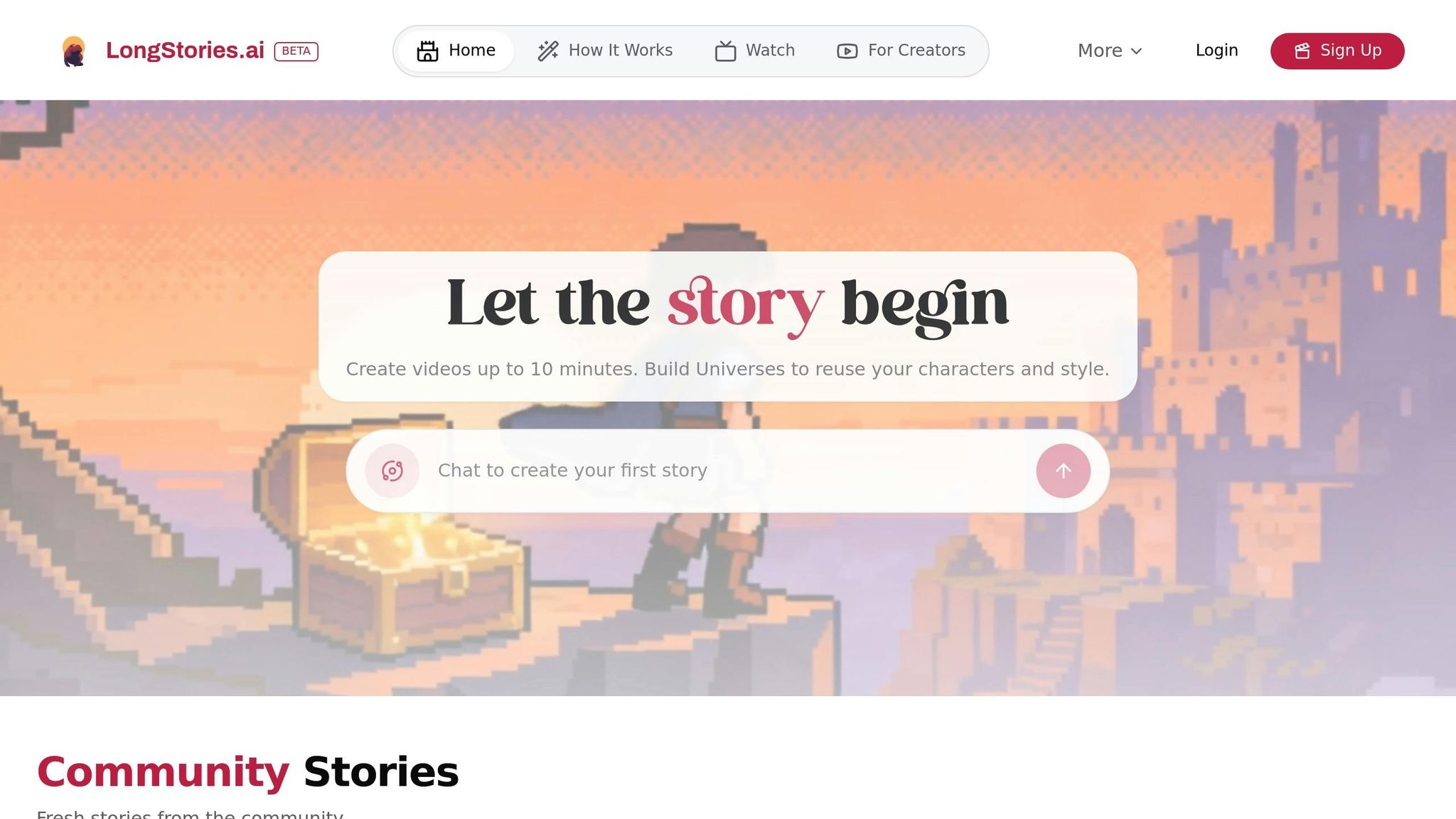
LongStories.ai is a standout tool that enables creators to generate fully animated, voiced videos up to 10 minutes long using just simple text prompts. Since its launch, it has helped produce over 5,000 video adventures, proving its popularity among creators who need fast, high-quality content.
Here’s how it works: You type in your story idea, and the AI does the rest. It writes a custom script, creates animations and images, adds voiceovers, times everything perfectly, and renders a ready-to-share HD video. The best part? You don’t need any editing skills. The platform has been used to create everything from educational videos to engaging, entertaining stories.
One of the most exciting features of LongStories.ai is its reusable universe tool. This lets you create consistent characters, styles, and voices that can appear across all your videos. It’s a game-changer for creators managing content on multiple platforms like YouTube and TikTok, as it saves time and ensures a cohesive brand identity.
For YouTube, you can craft full-length 10-minute stories that align with monetization requirements. For TikTok, you can easily clip the most captivating 15-30 second segments or create entirely new short-form content using your established characters. Plus, with bulk editing tools, you can update multiple videos simultaneously - perfect for keeping your branding consistent or making quick adjustments across your entire content library.
Pricing starts at $9/month, with premium plans offering additional features. New users also get 400 credits to test out the platform.
Other AI Animation Tools to Consider
While LongStories.ai offers a robust solution, other tools are worth exploring depending on your needs.
- Domo AI: This tool focuses on fast, stylized animations, making it ideal for meme-style content and viral TikTok trends. However, it’s limited to 60-second videos and offers moderate character consistency, which makes it less suitable for long-term branding.
- LTX Studio: Known for advanced animation controls and high-quality output, this platform appeals to creators seeking artistic flexibility. It supports videos up to 5 minutes in both horizontal and vertical formats. The trade-off? A steeper learning curve and only moderate character consistency.
- Morphic: Designed for character-driven stories, Morphic excels in customization and character consistency. Like Domo AI, it’s limited to 60-second videos, making it a good choice for TikTok creators but less versatile for YouTube’s longer content needs.
Each tool has its strengths, so your choice will depend on your content strategy. If TikTok is your primary focus, Domo AI or Morphic may be all you need. But if you’re creating for both YouTube and TikTok and need consistent branding, LongStories.ai’s features offer greater flexibility.
AI Animation Platform Comparison Chart
| Platform | Max Video Length | Animation Quality | Character Consistency | Supported Formats | Pricing |
|---|---|---|---|---|---|
| LongStories.ai | Up to 10 minutes | High | Strong | Horizontal, Vertical | $9-$99/month |
| Domo AI | Up to 60 seconds | Medium | Moderate | Vertical | Free/Premium |
| LTX Studio | Up to 5 minutes | High | Moderate | Horizontal, Vertical | Subscription-based |
| Morphic | Up to 60 seconds | Medium | Strong | Vertical | Free/Premium |
This chart highlights why video length is such a critical factor. LongStories.ai’s ability to produce 10-minute videos makes it perfect for YouTube’s longer format while still allowing you to create short clips for TikTok. Tools like Domo AI and Morphic, with their shorter video limits, are better suited for TikTok-specific content or quick viral trends.
Character consistency is another important feature. It helps build audience recognition and loyalty, especially for creators aiming to establish a strong brand presence across platforms. LongStories.ai and Morphic excel in this area, whereas Domo AI and LTX Studio might require more manual effort to maintain consistency.
Finally, animation quality varies across platforms. Higher-quality animations look more polished but may take longer to render. The right choice depends on your audience’s expectations and how frequently you plan to post. Balancing quality with efficiency is key when choosing the best tool for your needs.
How to Get More Views and Engagement
Once your video formats are polished, the next step is implementing strategies to boost engagement. On platforms like YouTube and TikTok, audience interaction is what drives growth. The difference between a video that barely gets noticed and one that goes viral often boils down to three things: grabbing attention quickly, tapping into platform trends, and encouraging viewers to interact. These strategies build on your optimized video format, helping you sustain and grow your audience.
Starting Videos with Strong Hooks
The first few seconds of your video are everything. If your opening doesn’t grab attention, viewers will scroll away, and the platform’s algorithm will move on to other content. On TikTok, this window is even shorter - just 2 seconds to make an impression.
Here’s how to nail those critical opening moments:
- Use bold visuals right away. For animated content, this might mean starting with vibrant colors, fast movements, and eye-catching text. Think of an animated character bursting onto the screen with dynamic motion - it’s hard to ignore.
- Jump straight into the action. Skip slow intros and show your animated character in the middle of something exciting. Let the context come later.
- Tease the viewer. Phrases like "Wait for it..." or "You won’t believe what happens next" paired with engaging visuals can keep viewers hooked. Just make sure your content delivers on the promise.
Once you’ve mastered the art of the hook, the next step is leveraging trends to keep viewers engaged.
Using Platform Trends and Features
Trends can be a powerful tool for boosting your video’s visibility, especially on TikTok. Trending sounds, challenges, and hashtags can amplify your reach, but the secret is to put your own spin on them. For example, if there’s a popular dance challenge, you could animate your character performing the moves with exaggerated expressions for a fun twist.
Here are some ways to make trends work for you:
- Combine popular and niche hashtags. Mix trending tags with specific ones like #animation or #storytime to attract both general and targeted audiences.
- Use TikTok’s interactive features. Duets, Stitch, and interactive stickers are great for sparking engagement. For instance, create a video where your animated character asks a question, inviting real people to respond.
- Optimize for YouTube Shorts. While TikTok relies on trends, YouTube Shorts benefits from searchability. Use trending hashtags, optimize titles with relevant keywords, and include auto-captions to make your videos discoverable long after they’re posted.
Timing also plays a big role. Posting when your audience is most active can give your content an initial boost, increasing its chances of being promoted by the algorithm. Check your analytics to find the best times to post.
Getting Viewers to Like, Share, and Comment
Encouraging interaction is key, but generic calls to action like "Please like and subscribe" don’t always cut it. Instead, try weaving engagement prompts naturally into your content. For example:
- Pose specific questions. Ask things like, "Which character would you choose?" or "What should happen in the next episode?" These feel more engaging than broad requests.
- Use visual cues. Animated arrows pointing to the like button or characters gesturing toward engagement options can subtly guide viewers without feeling pushy.
- End with open-ended questions. Prompts like "What would you do in this situation?" or "Share your own story!" encourage viewers to leave comments.
Interactive features can also make a big difference. TikTok’s polls let viewers participate directly, while on YouTube, you can invite comments to shape future episodes or character decisions. The more viewers engage, the more algorithms will push your content to new audiences.
Finally, focus on creating shareable content. Videos that are funny, surprising, or emotionally relatable are more likely to be passed along. Whether it’s a clever animation, a touching story, or a useful tip presented in an entertaining way, give viewers a reason to share it with friends.
Building anticipation for what’s next is another way to keep viewers coming back. End your videos with teasers for upcoming content, create multi-part series, or develop recurring characters that audiences will want to follow. This keeps your audience engaged and turns casual viewers into loyal fans.
Key Steps to Start Optimizing Your Videos Today
Now that you’ve got a handle on platform optimization and engagement strategies, it’s time to put them into practice. Start simple, refine as you go, and use these actionable steps to get your animated videos optimized right away.
Adapt to each platform’s format. Every platform has its own preferred video dimensions and styles. Use tools that can automatically reframe horizontal videos into vertical formats for platforms like TikTok or Instagram. This ensures your content looks polished and fits seamlessly into users’ feeds.
Leverage AI to streamline production. Tools like LongStories.ai can save you tons of time. With just a few prompts, you can create fully animated, voiced videos up to 10 minutes long, complete with custom characters and scripts. For platforms like TikTok, cut these longer videos into 15-30 second clips, while keeping the full-length versions for YouTube. This way, you’re creating content for multiple platforms in one go, maximizing your efforts.
Boost engagement with smart tactics. Once production is running smoothly, shift your attention to strategies that grab attention. Start your videos with a strong visual or a question within the first two seconds to hook viewers. Add captions to every video - many people watch with the sound off, and captions can significantly increase watch time and engagement. Use a mix of trending and niche hashtags (e.g., #animation, #storytime) to reach both broad and specific audiences.
Monitor performance and adjust. Keep an eye on key metrics like views, watch time, completion rates, and engagement. On YouTube, track click-through rates and subscriber growth. On TikTok, analyze hashtag performance and follower trends. Use each platform’s analytics tools to figure out what video lengths, styles, and posting times resonate most with your audience, then tweak your content accordingly.
Stick to a consistent posting schedule. Post when your audience is most active - your analytics can help you pinpoint these peak times. Regular uploads are more important than perfection, so aim for consistency, even if it means starting with simpler content while you fine-tune your process.
Many successful creators focus on mastering one platform first, learning its nuances and audience preferences, before branching out to others. Whether you’re creating fresh animated stories with AI or repurposing existing content for different formats, the key is to take action and learn as you go. Waiting for the “perfect” strategy will only delay progress - start now and refine along the way.
FAQs
How can I use AI tools like LongStories.ai to create high-quality videos for YouTube and TikTok?
AI tools like LongStories.ai simplify the process of creating animated videos designed for platforms like YouTube and TikTok. With just a text prompt, LongStories.ai can generate fully animated, voiced cartoons featuring custom characters and personalized scripts. The result? Shareable HD videos, ready in minutes - no need for advanced video-editing skills.
To make the most of your content, tailor your videos to each platform's audience. For TikTok, aim for short, attention-grabbing clips, while YouTube allows for longer, more detailed storytelling. LongStories.ai supports videos up to 10 minutes long, making it an excellent choice for creating engaging content that works seamlessly across both platforms.
How can I make sure my animated videos grab attention on TikTok within the first two seconds?
To grab attention on TikTok right away, focus on eye-catching visuals and engaging storytelling. Start your video with something bold - whether that's a striking image, vibrant colors, or quick, dynamic movements. Pair it with an intriguing opening line or a trending sound to spark curiosity.
TikTok is all about quick, engaging content, so keep it short and to the point. Fast-paced editing works wonders, and using trending sounds or popular hashtags can increase your reach. Experiment with different hooks and pay attention to how your audience responds to fine-tune your approach.
How can I adjust video formats and lengths for YouTube and TikTok while keeping my brand consistent?
To keep your brand identity consistent on both YouTube and TikTok, start with your visuals. Make sure elements like your logo, color scheme, and fonts are the same across both platforms. This creates a cohesive look that helps people instantly recognize your brand.
Next, adjust your content to fit the style of each platform. YouTube works best for longer, in-depth videos - think 8 to 10 minutes - while TikTok is all about quick, attention-grabbing clips that run between 15 and 60 seconds.
Finally, maintain a consistent tone and messaging that reflects your brand’s personality. Tools like LongStories.ai can simplify this process by creating animated videos that match your branding, letting you save time without sacrificing quality.
Related posts
LongStories is constantly evolving as it finds its product-market fit. Features, pricing, and offerings are continuously being refined and updated. The information in this blog post reflects our understanding at the time of writing. Please always check LongStories.ai for the latest information about our products, features, and pricing, or contact us directly for the most current details.