
Best AI Video Generators Comparison for 2026

Most AI video generators are built for 10-second clips, impressive demos, but useless for anyone trying to tell a real story. If you're producing a YouTube series, a music video, or a children's episode, you need tools that handle characters consistently across scenes, not just a single cinematic moment.
This guide compares eight leading AI video generators across the criteria that actually matter for narrative work: video length, character consistency, full-pipeline support, and honest pricing.
Quick Comparison
- LongStories.ai — Best for episodic content, music videos, and kids' stories. Up to 15 minutes, strong character consistency, free trial / $9.99/mo. Only full-pipeline tool for long-form narrative.
- Runway Gen-4.5 — Best for short clips and creative editing. ~10 seconds per generation, moderate character consistency, $12/mo. Best creative control for individual clips.
- Synthesia — Best for corporate/training videos and avatars. Up to ~30 minutes (avatar-based), avatar-only consistency, free / $29/mo. 160+ language avatar voiceovers.
- HeyGen — Best for marketing, social media, and lip-sync. Up to 20 minutes (Business plan), avatar-only consistency, free / ~$29/mo. Avatar realism and lip-sync translation.
- Google Veo 3.1 — Best for cinematic clips and high-fidelity generation. ~8 seconds per generation, limited character consistency, $19.99/mo (AI Premium). Highest visual fidelity per clip.
- Kling AI 3.0 — Best for realistic motion and quick clips. Up to 15 seconds per generation, basic character consistency, $8/mo. Cost-effective cinematic motion.
- Luma Dream Machine — Best for visual experimentation and short-form content. ~10 seconds per generation, basic character consistency, $7.99/mo. Speed via Ray3.14 at native 1080p.
- Sora 2 (OpenAI) — Best for narrative clips and cinematic storytelling. 15–25 seconds, moderate character consistency, $20/mo (ChatGPT Plus). Strong cinematic scene generation.
Individual AI Video Generator Breakdowns
1. LongStories.ai

LongStories.ai is the only platform in this comparison purpose-built for long-form narrative video, and it shows in every feature decision. Where other tools ask you to stitch together 10-second clips yourself, LongStories.ai gives you a script-to-export pipeline designed for full episodes, serialized YouTube content, and complete music videos.
The platform's character consistency engine is its most distinguishing feature. Characters maintain their appearance, style, and voice across multiple scenes without re-prompting, which is the fundamental challenge that breaks every other general-purpose tool when you try to use them for storytelling. You can check out how this plays out in practice in their guide on how to create AI music videos.
Best for: YouTube series creators, children's content producers, music video directors, and serialized storytellers.
Key features:
- Videos up to 15 minutes in a single project
- Full pipeline: script → scene generation → audio → export
- Custom voice support (up to 10 voices on Creator plan)
- Consistent character rendering across scenes
- Watermark-free exports from the Pro plan ($59/mo) upward
Pricing: Free trial available. Paid plans start at $9.99/mo (Starter), scaling to $25 (Plus), $59 (Pro), and $99/mo (Creator). The Creator plan includes 8,500 credits per month, roughly 1,800 seconds of animated video and API access.
Limitations: The platform is optimized for animated and illustrated narrative styles rather than photorealistic live-action footage. If hyperrealism is your primary goal, you may want to combine LongStories.ai for structure with a clip generator for hero shots.
2. Runway Gen-4.5
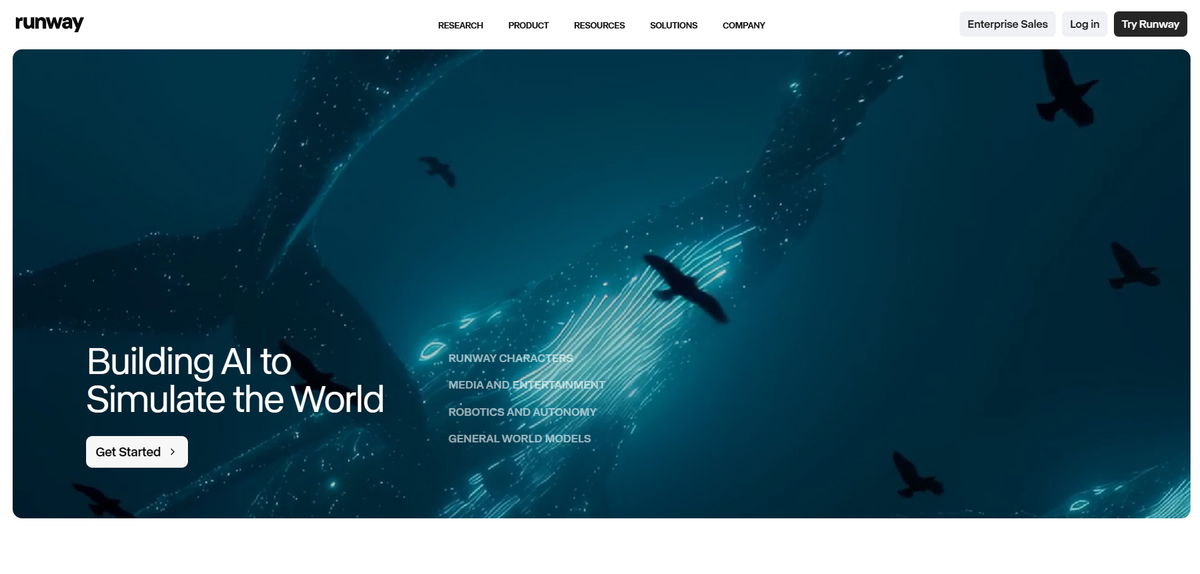
Runway is one of the most polished AI video tools available for individual clip generation. Gen-4.5 offers strong creative control through text-to-video, image-to-video, and a robust in-browser editing suite. For filmmakers who want to experiment with visual direction, camera movement, lighting, mood, Runway delivers real quality.
The challenge for narrative creators is fundamental: Runway generates clips in the 10-second range. Assembling a cohesive episode from dozens of individual generations is a manual, time-consuming process with no built-in character or style memory between sessions. Each clip is effectively a fresh start. For more context on how it fits into broader filmmaking workflows, see the breakdown of best AI filmmaking tools.
Pricing: Free trial available. Standard at $12/mo, Pro at $28/mo, Unlimited at $76/mo, with Enterprise custom pricing. Credits cost 25 per second for Gen-4.5 video.
Best for: Visual artists, short-film experimenters, and creators who need strong individual clip quality and can handle manual post-production assembly.
Limitations: No native long-form pipeline, no character persistence across scenes, credit costs escalate quickly for high-volume episode work.
3. Synthesia
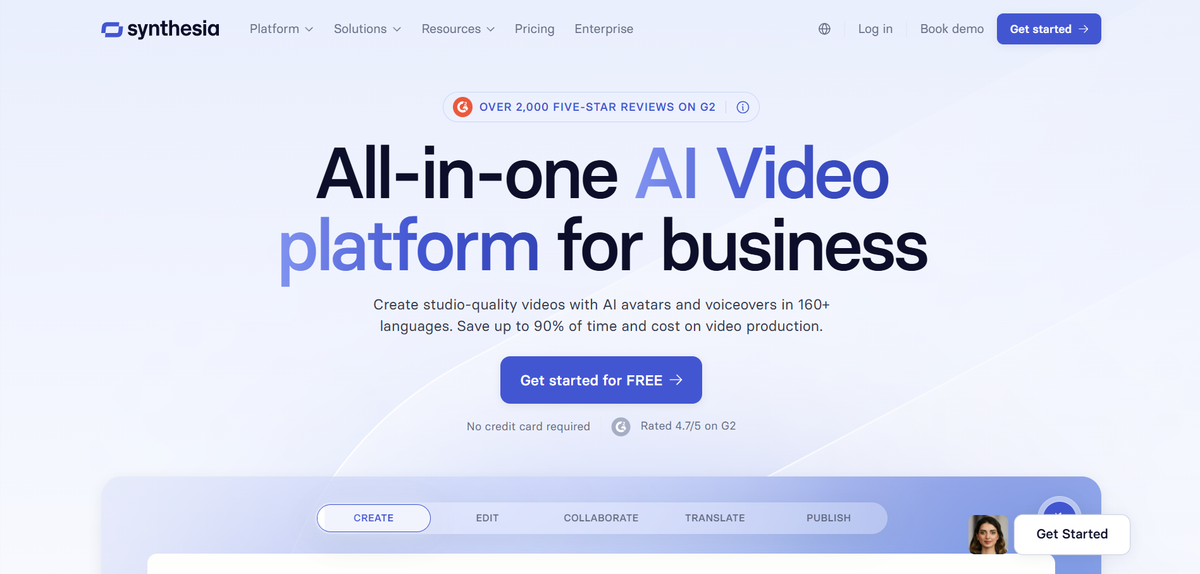
Synthesia has carved a specific and defensible niche: avatar-based video for business communication. The platform excels at producing presenter-style videos in over 160 languages, making it a strong choice for HR departments, L&D teams, product marketing, and corporate communications.
Character consistency here means something different, your avatar remains consistent because it's a locked digital presenter, not a narrative character navigating scenes. This works perfectly for structured content like training modules and product walkthroughs, but it's not a storytelling tool.
Pricing: Free plan includes 3 minutes/month with watermarks. Starter at $29/mo, Creator at $89/mo ($67 billed annually), Enterprise on request.
Best for: Corporate training videos, multilingual marketing content, explainer videos, internal comms.
Limitations: Not suitable for cinematic storytelling, fictional narratives, or music videos. Limited visual variety, most outputs look like professional talking-head presentations.
4. HeyGen
HeyGen focuses on avatar realism and video translation, with its Avatar IV technology pushing digital humans closer to broadcast quality. The platform is particularly strong for marketers and creators who need persona-driven content, product pitches, social media videos, localized content in multiple languages.
Video length goes up to 20 minutes on the Business plan, which is more generous than most competitors. However, this length applies to avatar-presenting content, not multi-scene narrative storytelling with different characters and environments.
Pricing: Free plan includes 3 videos/month at up to 3 minutes each. Creator plan supports up to 5-minute videos. Business plan reaches 20-minute maximum lengths. Paid plans start around $29/mo.
Best for: Social media marketers, agencies needing localized content, brand video teams.
Limitations: Not designed for episodic narrative workflows. Character consistency outside of avatar personas is limited. Costs scale quickly for volume production.
5. Google Veo 3.1
Google Veo 3.1 produces some of the most visually stunning AI video clips available in 2026. The model's ability to generate physically coherent motion, accurate lighting, and native 1080p output is genuinely impressive. For individual hero shots and cinematic moments, it competes with or exceeds anything else in this list.
The pricing structure reflects its positioning as a premium generation model. Access runs from $19.99/mo (Google AI Premium with Veo 3.1 Fast) up to $249.99/mo (Google AI Ultra for full 4K quality). API access through Vertex AI prices at $0.10–$0.40 per second depending on tier. A 10-second high-quality clip can cost $4+ via API.
Best for: Professional creators and developers who need maximum visual fidelity for short scenes. Strong for filmmakers using AI as a VFX complement.
Limitations: Per-clip generation maxes out around 8 seconds. No memory of characters across generations. Building a multi-scene narrative requires significant external tooling. The cost per episode would be prohibitive at scale.
6. Kling AI 3.0
Kling AI 3.0 from Chinese developer Kuaishou has earned a serious following for its cinematic motion quality at competitive pricing. The model handles realistic physics, camera movement, and fluid human motion particularly well, and at $8/mo entry pricing, it's one of the best values in short-clip generation.
Single generations reach up to 10–15 seconds, with an extend feature on paid plans that can push clips to around 3 minutes through chained generation. That's a meaningful improvement over pure clip tools, but it still requires manual oversight for narrative continuity.
Pricing: Starter plans from around $8/mo. Pro configurations around $32/mo for 3,000 credits (~6 minutes of 720p video). Pay-per-second API access starts at ~$0.168/s.
Best for: Creators wanting high-quality motion clips at low cost. Social media creators, short-form video producers.
Limitations: 10-second single-generation cap makes episodic work impractical without significant manual assembly. No script-to-video pipeline.
7. Luma Dream Machine (Ray3.14)
Luma's Dream Machine received a significant update with the Ray3.14 model, which delivers native 1080p generation at 4x the speed of previous versions with meaningfully lower per-clip costs. The results are visually smooth and stylistically versatile.
Pricing on the Lite plan starts at approximately $7.99/mo with watermarked output. Standard runs around $23.99/mo with commercial use rights. Pro and Ultra tiers scale up to $300/mo for high-volume production. At roughly $0.12 per second of video, it sits in the mid-range competitively.
Best for: Visual experimenters, creators who want accessible 1080p quality, and developers building video workflows who need cost-efficient generation.
Limitations: Individual clips run around 5–10 seconds. No character memory or narrative pipeline. Assembling coherent multi-scene content is entirely on the creator.
8. Sora 2 (OpenAI)
Sora 2 generates longer clips than most competitors, between 15 and 25 seconds per generation, and its scene coherence is noticeably stronger than earlier AI video models. For creating individual cinematic moments with narrative intent, it performs well. It's available to ChatGPT Plus subscribers ($20/mo) with credit-based generation limits.
API pricing makes the cost transparency more complex: a 10-second Standard clip runs approximately $1.00, while a 10-second HD Pro render costs around $5.00. At those rates, building a full music video or episode through Sora alone becomes expensive quickly.
Best for: Creators already in the OpenAI ecosystem who want quality short narrative clips. Strong for storyboarding and scene visualization.
Limitations: 25-second generation cap. No end-to-end pipeline for full episodes or series. Cost per minute of finished narrative video is high at scale. Note: the Sora API is reportedly being sunset in September 2026 in favor of newer models.
How to Choose the Right AI Video Generator
The right tool depends entirely on what you're trying to produce. Here's how to match your use case to the right platform:
Episodic YouTube creators and serialized storytellers need character consistency, multi-scene workflows, and a production pipeline. LongStories.ai is the only tool in this list purpose-built for that requirement. Every other option requires significant manual assembly.
Music video producers face the same challenge, visual consistency across a 3–4 minute narrative with recurring characters demands a platform that remembers who your characters are. LongStories.ai's music video workflow addresses this directly, while tools like Runway or Kling can supply individual cinematic shots.
Children's content creators need safe, consistent character representation and ideally integrated voiceover tools. The AI voice tools for personalized kids' content guide pairs well with understanding how LongStories.ai handles multi-scene animated storytelling for young audiences.
Social media marketers creating 15–60 second clips with polished visual quality will find HeyGen, Kling AI, and Luma Dream Machine all competitive options, depending on whether they need avatar-based or scene-based content.
Businesses needing training and brand videos should evaluate Synthesia and HeyGen first. Both offer avatar-based workflows, multilingual support, and structured templates that suit corporate communication needs.
Five criteria worth weighting carefully:
- Video length: Does the tool support your full project, or will you be stitching clips manually?
- Character consistency: Can your protagonist look the same in scene 1 and scene 12?
- Audio and lip-sync: Is voiceover integrated, or does it require a separate tool?
- Pricing at project scale: A $0.50/second generation rate sounds small until you calculate a 4-minute music video.
- Workflow completeness: Script-to-export pipelines save hours per project.
Frequently Asked Questions
What is an AI video generator and how does it work?
An AI video generator uses machine learning models to create video content from text prompts, images, or scripts. Depending on the tool, this can mean generating short cinematic clips, animating still images, or producing full avatar-based presenter videos. The underlying models learn visual patterns from large datasets and render new footage based on your instructions.
Can I make full episodes or music videos with AI?
Yes, but the tool choice matters significantly. Most AI video generators are designed for short clips (5–25 seconds). LongStories.ai is specifically built for full-length episodes and music videos, handling the pipeline from script to final export with character consistency maintained throughout.
How do AI tools handle character consistency across scenes?
Most short-clip generators don't maintain character memory between separate generations, each prompt is effectively a new character. Tools like LongStories.ai are built specifically to preserve character appearance, style, and voice across scenes, which is why they're suited for narrative and episodic content.
What are typical pricing models and how do they scale for long videos?
Most tools use credit-based systems where each second of video costs a set number of credits. Entry-level subscriptions range from $8–$30/mo for light usage. At scale, per-second API pricing for high-quality models (like Veo 3.1 at $0.40/sec) can make a single 3-minute music video cost over $70 in generation alone. Subscription platforms like LongStories.ai offer more predictable project-level costs.
Are AI-generated videos legally safe for commercial use?
Most paid tiers of the tools in this guide include commercial use licenses with their subscriptions. However, policies vary. Free plans often restrict commercial use and add watermarks. Always verify the specific terms of your plan before publishing AI-generated content for commercial purposes.
Which AI video generator is best for children's content and personalized storytelling?
LongStories.ai is the strongest option for children's content due to its character consistency, safe content workflows, and ability to produce full-length animated stories. The platform supports custom voices and scene-level control that makes it practical for creators building personalized, episodic kids' content for YouTube or other platforms.
How do text-to-video and image-to-video workflows differ?
Text-to-video generates footage entirely from a written prompt, you describe a scene and the model creates it. Image-to-video animates an existing still image, adding motion while preserving the visual starting point. For narrative consistency, image-to-video is often used to maintain a character's appearance across scenes by anchoring each generation to a reference image. LongStories.ai automates much of this process natively within its pipeline.
Conclusion
The AI video landscape in 2026 offers impressive technology at every price point, but impressive clips and full narrative production are genuinely different problems. If your goal is social media content or individual cinematic moments, Kling AI, Luma Dream Machine, and Runway all deliver strong results at reasonable prices.
If you're building something with a story, a YouTube series, a music video, a personalized children's episode, the gap between LongStories.ai and everything else in this list is significant. The platform's end-to-end pipeline, character consistency engine, and project-level pricing transparency make it the only purpose-built solution for creators who need more than a clip generator. Start with a free trial, map it against your next project, and the right choice becomes clear.
LongStories is constantly evolving as it finds its product-market fit. Features, pricing, and offerings are continuously being refined and updated. The information in this blog post reflects our understanding at the time of writing. Please always check LongStories.ai for the latest information about our products, features, and pricing, or contact us directly for the most current details.