
AI 101: How LLMs Work and Safe Practices
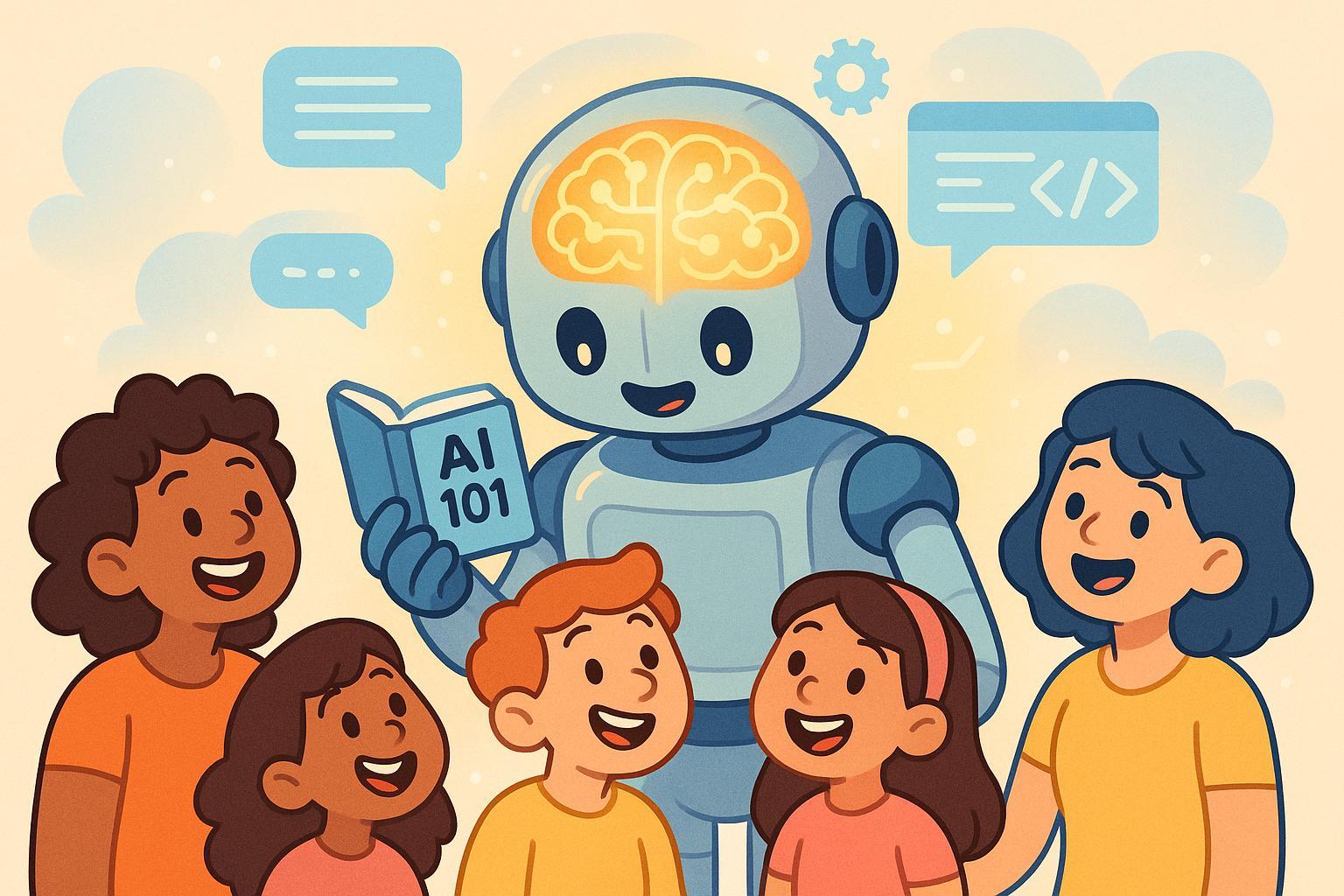
As artificial intelligence (AI) seeps deeper into our daily lives, understanding its foundations has never been more critical. For creators, educators, and AI enthusiasts, the advent of tools like Large Language Models (LLMs) and generative AI opens the door to transformative possibilities. However, these tools don’t come without challenges and questions about their development, safety, and our role in their interaction.
In this article, inspired by insights from AI experts like Maya Kulycky and Lila Ibrahim, we’ll break down foundational concepts around AI, its safe practices, and how it can be a game-changer for content creators and faceless YouTubers alike. If you’re curious about how AI works, how to integrate it responsibly, or how it can streamline your creative process, read on.
What is AI, and What Are Large Language Models (LLMs)?
AI, at its core, refers to technologies that enable machines and systems to mimic human intelligence, performing tasks like learning, problem-solving, decision-making, and understanding language. Within this broad field, Large Language Models (LLMs) stand out as a critical subset of AI technology.
So, What Exactly Are LLMs?
LLMs are essentially advanced computer programs trained on vast quantities of data - think billions of pages from books, articles, websites, forums, and more. Using powerful supercomputers, developers process this data and refine it with human feedback to create a tool capable of generating text and engaging in natural, human-like conversations. Examples include tools like OpenAI’s GPT series or Google’s Gemini.
What About Generative AI?
Generative AI is a broader category that encompasses LLMs but also includes tools capable of producing art, images, and even video from text prompts. If you’ve ever used AI to create a custom avatar, generate a concept for a video, or write a social media caption, you’ve experienced generative AI at work.
While LLMs and generative AI often overlap in their capabilities, their shared purpose is to assist humans in tasks that typically require creativity, language comprehension, or pattern recognition.
The Human Brain vs. AI: Why Our Role Still Matters
During the podcast, Maya Kulycky, VP of Strategy and Operations at Google Research, made an important observation: AI is not the human brain - and it never will be. While AI mimics certain cognitive processes, the human brain remains unparalleled in efficiency, energy use, and its ability to innovate and empathize.
Kulycky explains that AI should be viewed as a collaborative tool, not a replacement. For example, while AI can streamline workflows, such as searching for products or organizing information, it relies on human oversight to refine its outputs. This concept underscores the importance of the human-in-the-loop approach, where AI is used as an extension of human creativity and decision-making rather than as a standalone operator.
Here’s a simple analogy Kulycky shared: imagine needing to find a red puffer jacket for your child. Using AI, you can upload a photo or describe the jacket’s features, and the system will quickly find matches. However, as a user, you still need to verify the results and make the ultimate decision about what to purchase. The same principle applies to content creation or research - AI accelerates processes but doesn’t replace human judgment.
Safe Practices and Responsible Innovation in AI
Another key theme from the podcast was the importance of responsible AI development and usage. Lila Ibrahim, COO of Google DeepMind, elaborated on how creating and deploying AI systems responsibly is central to innovation, especially as these tools become more integrated into society.
Key Practices for Safe AI Development
- Collaboration Across Disciplines: At Google DeepMind, scientists work closely with experts from fields like humanities, education, and ethics to ensure AI’s impact is positive and inclusive.
- Testing and Validation: Before releasing tools like AlphaFold - a system that predicts protein structures - DeepMind collaborated with over 2.5 million researchers from 190 countries to ensure its safety and usability.
- Ongoing Oversight: AI tools are constantly monitored and updated to address biases, errors, and risks.
The Role of Collaboration
As Ibrahim emphasized, AI should happen with us, not to us. This philosophy ensures that AI users, whether they are educators, creators, or businesses, are empowered to shape how the technology is applied. By incorporating diverse voices into AI development, we can build systems that align with societal values and needs.
Applications of AI for Content Creators and Faceless YouTubers
If you’re a content creator or a faceless YouTuber looking to scale your production, AI can be your ultimate co-pilot. Here are some ways you can leverage it in your workflow:
1. Streamline Research and Scriptwriting
LLMs can accelerate the research process by summarizing complex topics or generating ideas for video scripts. However, as both Maya and Lila advised, don’t treat AI’s output as gospel - always verify and personalize the information.
2. Generate Visuals and Media
Generative AI tools can create thumbnails, concept art, or short animations to accompany your videos. This is especially useful for faceless creators who rely on visuals to engage their audience.
3. Multitask Like Never Before
AI can help you manage repetitive tasks, from transcribing video interviews to scheduling posts or optimizing keywords for SEO. Tools like NotebookLM even allow users to upload manuals or documents and ask questions directly, cutting through information overload.
4. Unlock Accessibility
For creators with disabilities or learning challenges, AI can be a game-changer. For instance, Lila Ibrahim shared how her dyslexic daughter uses AI to organize her thoughts and communicate them more effectively, boosting her confidence and productivity.
5. Experiment with Personalization
AI tools can analyze audience preferences and suggest tailored video topics or formats. This ensures you’re creating content that resonates with your target demographic.
The Future of AI: Transforming Science and Society
Beyond content creation, AI is already revolutionizing areas like history and medicine:
- Project Aeneas: AI helps historians fill in gaps in ancient texts, translating and providing context for fragmented artifacts.
- AlphaFold: This groundbreaking system has advanced our understanding of protein structures, enabling breakthroughs in disease research, agriculture, and environmental science.
These examples highlight AI’s potential to address some of humanity’s greatest challenges when used responsibly.
Key Takeaways
- AI and LLMs help machines perform tasks requiring human-like intelligence, such as learning, problem-solving, and language comprehension.
- LLMs are trained on vast datasets, enabling them to generate human-like text and content. Generative AI expands this capability to include visuals and multimedia.
- AI is a collaborative tool, not a replacement for human creativity or decision-making. Oversight and refinement are critical.
- Responsible AI development involves collaboration, testing, and ongoing monitoring to ensure safety and inclusivity.
- Content creators can use AI to streamline workflows, personalize content, and boost productivity. However, outputs should always be verified and refined.
- AI is revolutionizing fields like history and medicine, demonstrating its potential for widespread societal impact.
- To maximize AI’s benefits, users must remain curious and proactive, questioning how the technology works and engaging with it thoughtfully.
Conclusion
AI, particularly LLMs and generative tools, offers immense potential for creators, educators, and innovators. But with great power comes the responsibility to understand and use these tools thoughtfully. By staying informed, collaborating with AI, and maintaining a human-centered approach, we can ensure that this technology serves as an extension of our creativity and ambition - not a replacement for it.
The future of AI isn’t about machines taking over; it’s about empowering humanity to achieve more, together. Let’s explore this journey responsibly, with curiosity as our guide.
Source: "AI 101: Everything parents need to know" - aiEDU Studios, YouTube, Oct 2, 2025 - https://www.youtube.com/watch?v=dYSlxF8RPKc
Related posts
LongStories is constantly evolving as it finds its product-market fit. Features, pricing, and offerings are continuously being refined and updated. The information in this blog post reflects our understanding at the time of writing. Please always check LongStories.ai for the latest information about our products, features, and pricing, or contact us directly for the most current details.